


New South Wales has hit a turning point in its housing story, recording more than 50,000 new housing approvals over the past year, the strongest showing since 2023.
After years of sluggish activity and rising frustration among developers and builders, this latest data from the Australian Bureau of Statistics suggests confidence is beginning to return to the state’s housing pipeline.
And while it’s far from a complete recovery, the figures point to a system finally beginning to move.

A Clear Uptick Across the Board
The headline number, a 23 per cent year-on-year rise in total approvals, is driven largely by a surge in low and medium-density projects, with new apartment approvals up nearly 50 per cent.
In September alone, seasonally adjusted approvals jumped by 30.4 per cent, from 3,680 dwellings in August to 4,800 one of the biggest monthly increases anywhere in the country.
The Minns Government has been quick to link this lift to its series of planning and housing reforms, aimed squarely at cutting red tape, speeding up assessments, and opening more pathways to finance.
Minister for Planning and Public Spaces Paul Scully described the latest results as “a strong sign that NSW’s planning reforms are working,” noting that the growth in multi-unit approvals reflects the state’s focus on well-located, medium-density housing near jobs and transport.
Policy Pressure and the Push for Supply
NSW has long been seen as the nation’s housing bottleneck, high demand, low land release, and layers of complex planning policy.
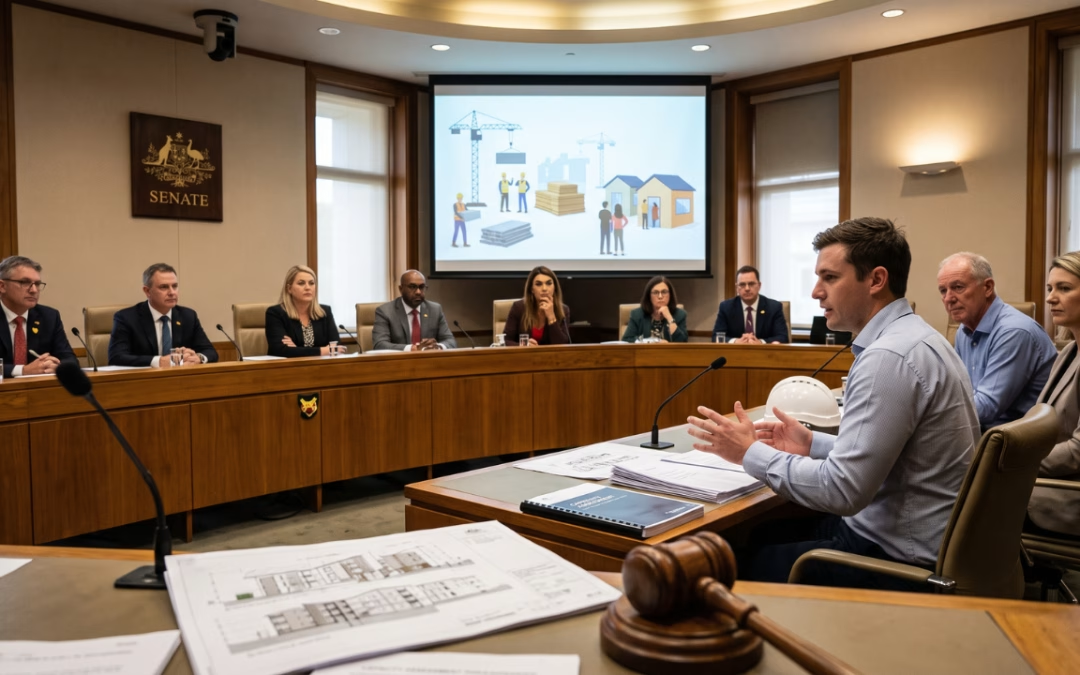
But over the past 12 months, the Minns Government has pushed through what it calls a “reset” of its planning partnership with local councils, underpinned by the NSW Planning System Reform Bill.
If passed by the Upper House, the Bill will simplify approval pathways, reduce appeal times, and strengthen accountability at council level.
The Government’s argument is simple: if NSW is to play its part in meeting the national target of 1.2 million new homes by 2029, its system must move faster and build smarter.
The reforms also align with a broader national trend toward medium-density infill over greenfield expansion, a shift that developers say makes both planning and infrastructure sense.
“Every extra apartment approved in the right location eases pressure elsewhere,” said one Sydney-based project manager we spoke to. “The approvals data is encouraging, but now we need the cranes to follow.”
Approvals Don’t Always Mean Action
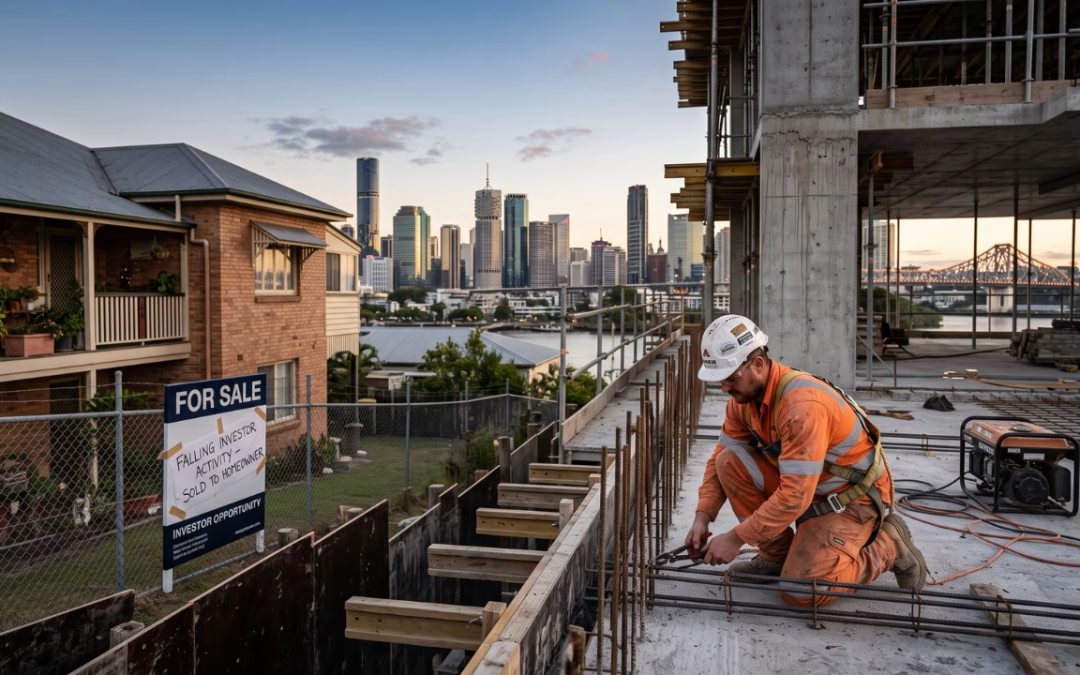
While approvals are a strong leading indicator, the industry knows that turning approvals into completed homes is where the challenge really begins.
Across NSW, more than 75,000 homes are currently under construction, the highest number of active builds on record, yet builders continue to grapple with high financing costs, labour shortages, and uncertain consumer sentiment.
For many, the bigger question is how much of this approved pipeline will actually get built.
Signs of Confidence Returning
Despite the headwinds, there’s growing optimism that the worst of the slowdown is over.
Apartment developers who paused projects in 2022–23 due to construction inflation are beginning to re-enter the market, encouraged by stabilising material costs and stronger pre-sales activity in Sydney’s middle-ring suburbs.
Regional NSW is also showing early signs of recovery, with new medium-density projects emerging in centres like Newcastle, Dubbo, and Wagga Wagga, areas that have seen steady population inflows since COVID.
For builders, these approvals represent future opportunity. Even if projects take time to commence, a consistent pipeline gives confidence to retain staff, invest in systems, and plan ahead.
What It Means for Builders
For residential builders on the ground, the rebound in approvals may not deliver immediate relief but it does signal demand will hold steady in the medium term.
Medium-density developments, townhouses, and small apartment complexes will be key growth areas as NSW seeks to balance affordability with liveability.
That means opportunities for builders with strong networks, proven compliance records, and the ability to deliver at scale under modern planning conditions.
For smaller builders, the shift also creates subcontract opportunities in finishing and fit-out stages, as larger developments ramp back up.
The Good Builder spoke to several trade contractors who noted an increase in tender requests for upcoming multi-unit builds in western Sydney and the Illawarra, a welcome change after two quiet years.
Still a Long Road Ahead
Despite the positive momentum, Minister Scully acknowledged that the job isn’t done:
“Breaking through the 50,000 mark for the first time in more than two years shows confidence is returning to the housing sector,” he said.
“But there’s still more work to do, we need the Planning System Reform Bill to pass so we can further streamline the process and keep this momentum going.”
Industry groups agree. The Master Builders Association of NSW noted that while the latest numbers are “encouraging,” they must be matched with continued investment in infrastructure, faster subdivision approvals, and long-term workforce strategies.
“Without skilled trades, approvals mean little,” an MBA spokesperson said. “The focus now needs to be on supporting builders to deliver what’s been approved.”
The Bottom Line
The NSW housing market is far from fixed, but for the first time in years, the numbers are heading in the right direction.
After a long period of delays, bottlenecks and uncertainty, the state’s housing pipeline is growing again and that’s a positive story for everyone in the industry.
Whether the momentum lasts will depend on how effectively policy translates into production. But one thing is clear: builders are watching closely, and the sector is ready to build if given the chance.

Author: TGB Editorial


0 Comments