


Anti-dumping and countervailing duties on imported steel have stacked up fast this year. Layered on top of WT’s forecast that building costs stay above 5 per cent, the message for anyone pricing structural steel is simple. Re-cost now.
If you are quoting a job with any meaningful steel content in 2026, the cost base under your feet has shifted twice over, and most of it has happened in the background while everyone watched the Middle East.
The Middle East conflict has dominated the headlines since February, and fairly so. But while diesel and petrochemical linked materials were grabbing attention, the Anti-Dumping Commission was quietly stacking duty after duty onto imported Chinese steel. Hot rolled coil, rebar, corner beads, ceiling frames. One after another, through the first half of the year.
None of these moves are dramatic on their own. Put together, they reset the floor under one of the most common materials on any site. And they land at exactly the moment WT’s June 2026 Australian Construction Market Conditions Report is forecasting building cost escalation to stay above 5 per cent nationally for the next three years, before the conflict is even factored in.
Two separate forces, pushing the same direction, on the same material. Here is what is actually going on and what it means for the way you price.
What the duties actually are
Let us be specific, because the detail matters when you are the one carrying the cost.
On 4 May 2026, the Anti-Dumping Commission confirmed measures on hot rolled coil steel from China. The headline number floating around is a 3.4 per cent countervailing duty, which is the part that offsets Chinese government subsidies. That is real, but it is the smaller half of the story. Sitting alongside it are anti-dumping duties ranging from 38.1 to 79 per cent on specific Chinese exporters, with the country’s largest producer, Baoshan, hit at 59.1 per cent. Anti-dumping duties apply where goods are sold into Australia below their normal value.
Hot rolled coil is not a niche product. It is the feedstock that becomes structural sections, sheet, plate and a long list of fabricated components.
Rebar got its own treatment. From 13 April 2026, the Commission moved the anti-dumping duty on Chinese reinforcing bar to a new fixed rate system at 23.7 per cent, up from the previous 19 per cent. The Commission found that letting the measures lapse would likely see dumping and material injury to local producers resume, so the duties continue for another five years.
Then there is the rest of the wall. A 4.5 per cent countervailing duty on steel corner beads and angles, the stuff used in drywall and plastering, from 8 May. A 10 per cent anti-dumping duty on steel ceiling frames, with some non cooperative exporters facing the corner bead duty on top, taking the combined hit toward 14.5 per cent on certain shipments.
That is four separate steel product categories, all hit inside roughly a month, all used in residential and commercial building.
But I buy Australian steel
This is the part builders often miss, and it is the part that actually costs you money.
You might think duties on imported Chinese steel are someone else’s problem because you buy local. They are not, and the reason comes down to how local steel is priced.
InfraBuild is the only manufacturer of rebar in Australia. In the Anti-Dumping Commission’s own final report on the rebar measures, InfraBuild’s pricing is described as referencing an import price parity model. In plain terms, the local price tracks the landed cost of imported steel, including duties. When duties push the cost of imported rebar up, they lift the ceiling that local pricing sits under.
So the duty does not have to apply to the steel you actually buy to reach your invoice. It changes the price environment for the whole market. Local producers do not need to undercut a more expensive import. They price against it.
That is the mechanism. Trade policy on imports flows through to the yard price you pay, whether your steel came off a boat or out of Port Kembla.
Why this matters more in 2026 than it would have last year
In a normal year, a few percentage points on steel is something you absorb or pass through without much drama. 2026 is not a normal year, and the WT report explains why.
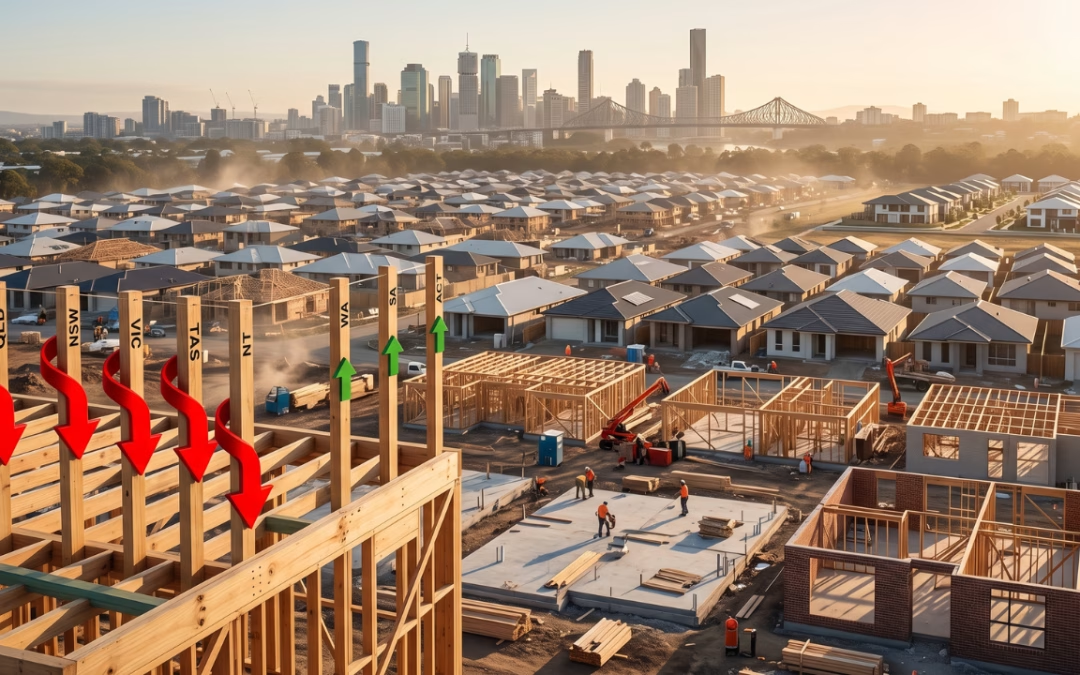
WT’s national forecast has business as usual building escalation at 5.5 per cent for 2026, easing slightly in 2027 before climbing back to 5.8 per cent by 2028. That is the baseline from ordinary market forces. The report deliberately excludes the direct cost impact of the Middle East conflict, treating it as a separate, project specific variable too volatile to model.
So the steel duties are not landing on a flat cost base. They are landing on top of an escalation environment that was already forecast to run hot, plus a conflict driven layer on energy and freight that sits on top of that again.
For South East Queensland builders, the WT numbers are sharper still. Brisbane building escalation is forecast to average 8.2 per cent a year to 2028, with the Gold Coast and Sunshine Coast close behind, driven by the Olympics pipeline and a wall of hospital and apartment work all chasing the same materials and trades. Steel was already on the watch list before any of this. The duties give it another nudge in a market that has no spare capacity to absorb one.
Where this lands on your job
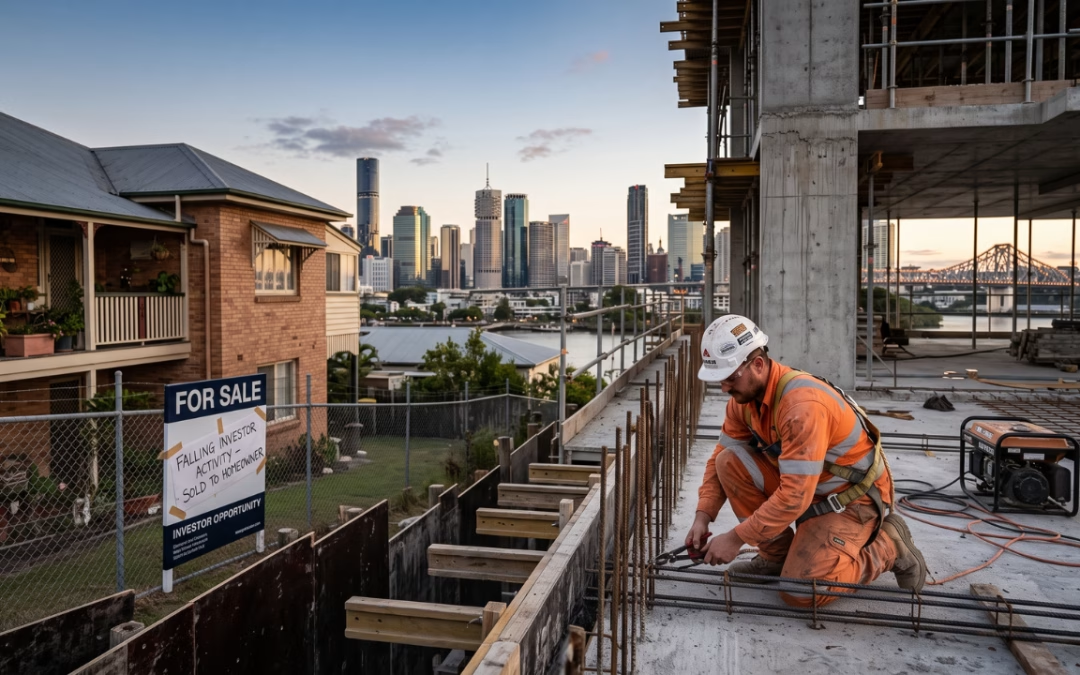
Think about where steel actually sits in a residential or light commercial build. Footings and slab reinforcement. Structural beams and posts. Wall and ceiling framing where steel framing is specified. Lintels. Brackets, fixings, and the fabricated steel that ties a frame together. Then the finishing steel, corner beads and angles, that the plasterers rely on.
A duty on rebar touches your slab. A duty on hot rolled coil touches your structural sections. A duty on corner beads touches your render and plaster scope. Very little of a build is untouched by at least one of these.
And here is the trap. If you quoted a fixed price job six or twelve months ago and you are building it now, you locked in a steel price that predates this entire run of duties. The cost has moved. Your contract has not.
What to actually do about it
This is not a reason to panic, and it is definitely not cover to inflate quotes across the board. The materials component is what is moving. The honest move is to understand your real exposure and price it properly.
A few practical steps:
- Look at re-costing your steel scope on live quotes. Any tender still sitting on rates set before April or May 2026 is carrying steel pricing that no longer reflects the market. Update it before it becomes a problem mid build, not after.
- Know your contract mechanism. Fixed price contracts protect the client when costs fall and expose you when they rise. If you are writing new contracts now, a properly drafted rise and fall clause is not unusual or aggressive. It is basic risk management. As Master Builders Queensland has set out, your options when costs spike depend on your contract, and the time to sort that is before you sign.
- Have the client conversation early. The worst version of this is absorbing the cost in silence and presenting a variation late, when the relationship is already strained. The builders who handle this well explain the cost environment up front, before the numbers move, not after.
- Shorten tender validity on exposed work. The big end of town has dropped tender validity to as little as 15 days on volatile materials. Holding a 60 or 90 day price on a steel heavy job in this environment is carrying real risk for free.
- Check your specification against the duties. If your documentation calls up imported steel sections or finishing products on the assumption they are the cheap option, that assumption may no longer hold once duties and the import parity effect are in. Talk to your supplier about what is actually landed and available.
The bigger picture
Step back and there is a pattern worth understanding. Australia is deliberately rebuilding a protective wall around its domestic steel industry, product by product, and there is a trade tension backdrop to it. China has already responded to broader Australian trade actions with duties of its own on other sectors. None of that is going to reverse quickly.
For builders, the takeaway is not political. It is operational. Cheap imported steel as a reliable lever to hold down build costs is becoming less reliable, and the local price is being pulled up alongside it. Combined with WT’s view that escalation stays elevated through 2028, the sensible planning assumption is that steel is a firm to rising cost for the foreseeable future, not a line item waiting to fall back to some earlier normal. Managing that well is part of the wider discipline of running a building business in Australia.
THE GOOD BUILDER TAKE
The builders who come through this well will be the ones who treat steel pricing as a live number, build the right mechanism into their contracts, and have the cost conversation with clients before the invoice lands. That is not extraordinary financial management. It is the same discipline that has separated the survivors from the casualties right through this cycle.
The full WT report, with the city by city escalation breakdown, is worth reading in detail and is available to download from WT’s insights page.
If material costs and contract exposure are on your mind right now, it is a topic we keep coming back to on The Good Builder Podcast. Worth a listen if you want to hear how other builders are pricing through this.
This article is general industry commentary and does not constitute financial or legal advice. Duty rates and measures are based on Australian Anti-Dumping Commission notices current as at June 2026. Builders should seek advice relevant to their specific circumstances and confirm current duty positions with their supplier or customs advisor.
Last updated: June 2026
Your Questions Answered:
1. What anti-dumping duties has Australia placed on Chinese steel in 2026?
Through the first half of 2026 the Anti-Dumping Commission stacked measures across several products. On hot rolled coil from China, anti-dumping duties of 38.1 to 79 per cent apply to specific exporters (Baoshan at 59.1 per cent), plus a 3.4 per cent countervailing duty, both confirmed 4 May 2026. Rebar moved to a fixed rate of 23.7 per cent from 13 April 2026, up from 19 per cent, continued for five years. Steel corner beads and angles carry a 4.5 per cent countervailing duty from 8 May, and steel ceiling frames a 10 per cent anti-dumping duty, with some shipments facing a combined figure near 14.5 per cent.
2. Do steel import duties affect the price of Australian-made steel?
Yes. Local steel is priced against the landed cost of imports, an import price parity model the Anti-Dumping Commission itself describes in its rebar findings, where InfraBuild is the only Australian manufacturer. When duties push the cost of imported steel up, they lift the ceiling local pricing sits under. The duty does not have to apply to the steel you buy to reach your invoice.
3. How much will building costs rise in 2026 according to WT?
WT’s June 2026 report forecasts national business as usual building escalation at 5.5 per cent for 2026, easing slightly in 2027 before rising to 5.8 per cent by 2028. That baseline excludes the direct cost impact of the Middle East conflict. South East Queensland runs hottest, with Brisbane building escalation forecast to average 8.2 per cent a year to 2028.
4. How should builders handle steel cost increases on fixed-price contracts?
Re-cost the steel scope on any live quote still on pre April 2026 rates. On new contracts, a properly drafted rise and fall clause shares the escalation risk rather than leaving you to absorb it. Have the cost conversation with clients early rather than presenting a late variation, and shorten tender validity periods on steel heavy work.
5. Which steel products are now subject to Australian import duties?
Hot rolled coil, reinforcing bar (rebar), steel corner beads and angles, and steel ceiling frames, all from China, plus earlier measures on items such as bolts and wire rod. Between them they touch slab reinforcement, structural sections, framing and plaster finishing on a typical build.



0 Comments