


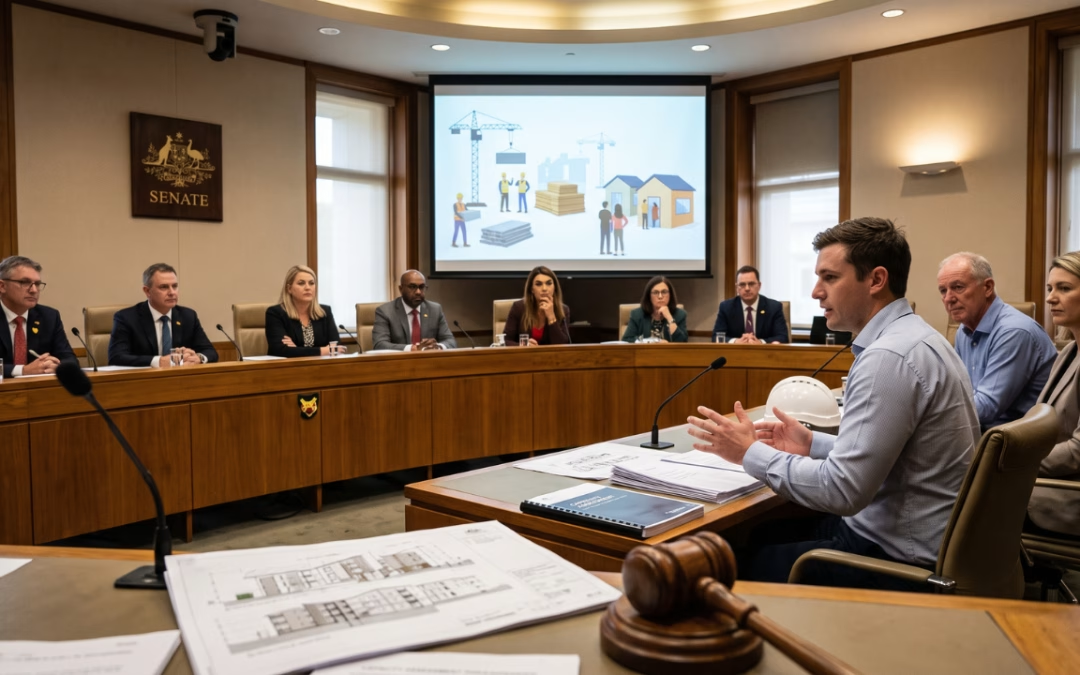
The ACT construction sector is on the brink of a cultural reset. In a move set to ripple across the industry, the ACT Government has announced it will embed the Culture in Construction Standard into every government-funded infrastructure project.
The initiative, championed by Chief Minister Andrew Barr, is being pitched not just as a procurement reform but as a long-term investment in people, productivity and sustainability.
“Everyone deserves to feel safe, respected and valued at work,” Barr said. “By implementing this standard, we’re improving the culture for those delivering infrastructure in the ACT and addressing barriers to attract and retain the skilled workforce needed for future projects.”

A Pipeline Backed by People
With billions of dollars in infrastructure projects underway from road upgrades to new schools and hospitals the ACT Government recognises that success isn’t just measured in concrete poured or steel installed. It lies equally in how people are treated on-site.
Construction is one of the territory’s largest economic contributors and employers. Yet, it also has one of the country’s highest rates of mental health challenges and workplace stress. By adopting the Culture Standard, the ACT aims to tackle those challenges head-on.
Procurement as a Lever for Change
Over the next 12 months, Infrastructure Canberra (iCBR) and Procurement ACT will integrate the Culture Standard into the territory’s procurement framework. The aim is to make cultural expectations a non-negotiable part of tendering and delivery.
Key benefits of the update include:
- Simplified procurement processes – reducing red tape for suppliers.
- Aligned thresholds – bringing consistency across government contracts.
- Streamlined framework – cutting duplication and making compliance clearer.
The Culture in Construction Advisory Group, which includes unions, industry bodies, and government representatives, has identified procurement as the most powerful way to drive meaningful improvements.
“By embedding the Culture Standard into our procurement ecosystem, we are reinforcing our commitment to inclusive, fair and efficient infrastructure delivery,” Barr said. “This supports local industry, promotes gender equity and drives better outcomes for all Canberrans.”
What the Standard Covers
The Culture in Construction Standard was developed by the Construction Industry Culture Taskforce, a collaboration between government, industry and unions. It provides a framework to tackle the deep-seated challenges facing the sector.
The three pillars are:
- Time for Life
- Promoting five-day work weeks.
- Reducing fatigue and improving safety.
- Supporting work-life balance without adding costs.
- Wellbeing
- Creating psychologically safe workplaces.
- Proactive measures to reduce stress and burnout.
- Embedding mental health support into project delivery.
- Diversity and Inclusion
- Designing inclusive amenities on-site.
- Flexible work practices for all workers.
- Clearer pathways for women and underrepresented groups.
Each element is designed to move the industry away from the long-hours, high-pressure culture that has historically led to poor retention and health outcomes.
Early Industry Impact
Although still in its roll-out phase, the Culture Standard has already started shaping conversations. Since late 2024, iCBR has worked closely with unions and contractors to pilot aspects of the standard.
This has sparked open discussions around psychological safety, leadership styles, and site amenities. Builders and subcontractors are reporting stronger engagement from teams when these issues are prioritised.
“Compassionate leadership doesn’t mean compromising delivery,” one industry participant told The Good Builder. “It means getting the best out of your people while still hitting budget and programme targets.”
Gender Equity in Focus
One of the most pressing challenges for the sector is diversity. Women make up less than 13% of Australia’s construction workforce, and even fewer are in site-based roles.
By requiring inclusive amenities and supporting flexible arrangements, the ACT Government hopes to break down barriers that keep women and minority groups from entering or staying in the industry.
This aligns with national efforts to tackle skills shortages. As infrastructure demand grows, the sector will need thousands of new workers. Attracting talent from a wider pool isn’t just fair it’s essential.
A Model for Other Jurisdictions?
The ACT is the first government in Australia to formally embed the Culture Standard across all its infrastructure procurement. Industry leaders say this could set a benchmark for other states and territories.
The move reflects a broader shift in the national conversation. With NCC 2025 updates, skills shortages, and rising public scrutiny, construction’s culture is now recognised as a critical lever for performance and reputation.
If the ACT model proves successful, it could influence how government agencies and major contractors across Australia handle workforce issues in future infrastructure pipelines.
The Road Ahead
Implementation will be gradual. Over the next 12 months, Procurement ACT will update its frameworks, tender requirements, and reporting processes. Consultation with unions, subcontractors, and major contractors will continue throughout.
Industry insiders note that change won’t happen overnight but they see momentum building. The ACT Government’s position ensures that companies seeking to win contracts must align with the new cultural standards, creating a race to the top rather than a race to the bottom.
The Good Builder Take
This is a positive step that shifts the conversation from compliance to culture. Builders often talk about cost blowouts and regulatory headaches, but what this really shows is that people are the foundation of every project.
By embedding wellbeing, diversity and work-life balance into procurement, the ACT is addressing both the human and commercial challenges of the industry. Safer, happier workers mean fewer delays, lower turnover, and ultimately better-built infrastructure.
For Canberra builders and suppliers, it’s a chance to lead by example – and for the rest of the country, it may be a preview of what’s to come.

Author: TGB Editorial



0 Comments