


As Australia races to meet its climate targets, the federal government is keeping carbon tariffs on the table—potentially impacting cement, steel, and other essential building materials. Here’s what the construction sector needs to know.
Australia’s construction industry is already battling one of its toughest periods in decades, with a wave of insolvencies, cost pressures, and a fragile market keeping builders on edge.
Now, another factor could soon enter the mix: carbon tariffs.
Speaking last week, Federal Energy Minister Chris Bowen confirmed that the Albanese government is considering applying tariffs on carbon-intensive imports such as cement and steel—key materials used across almost every Australian construction project.
While no formal policy has been announced, Mr Bowen’s remarks come as the government prepares to outline its 2035 emissions reduction target later this year—an update expected to set the tone for Australia’s climate policy in the years ahead.
For the building industry, which is already navigating tight margins and supply chain challenges, the prospect of new tariffs—and the cost increases they may bring—is a development that will be watched closely.
What’s a Carbon Border Adjustment Mechanism?
The measure under review is known as a carbon border adjustment mechanism (CBAM). The core idea: apply tariffs to imports from countries that do not have an equivalent carbon price or comparable emissions regulations to Australia.
The government’s goal is to avoid what is known as “carbon leakage”—where emissions-intensive production simply shifts offshore to avoid local climate policies, undermining domestic decarbonisation efforts.
A review by ANU Professor Frank Jotzo has already identified sectors most exposed:
- High risk: clinker, cement, lime
- Medium risk: steel, ammonia, glass
The concept is not unique to Australia. The European Union is implementing a similar CBAM as part of its climate strategy, and other nations are exploring comparable tools.
Why Is This Being Considered Now?
Later this year, Australia must submit its updated 2035 climate target to the United Nations, guided by recommendations from the independent Climate Change Authority.
While 2024 emissions data showed limited progress, Mr Bowen maintains that Australia remains broadly on track to meet its existing 43% reduction target by 2030.
However, with pressure mounting to do more, carbon tariffs are one of several additional mechanisms the government is now weighing.
“We want to ensure Australian industry is best placed to compete in a decarbonising world,” Mr Bowen said. “What could be the case is … we look at particular sectors first around cement and lime … but I’m not going to get in front of the process.”
A Divisive Proposal
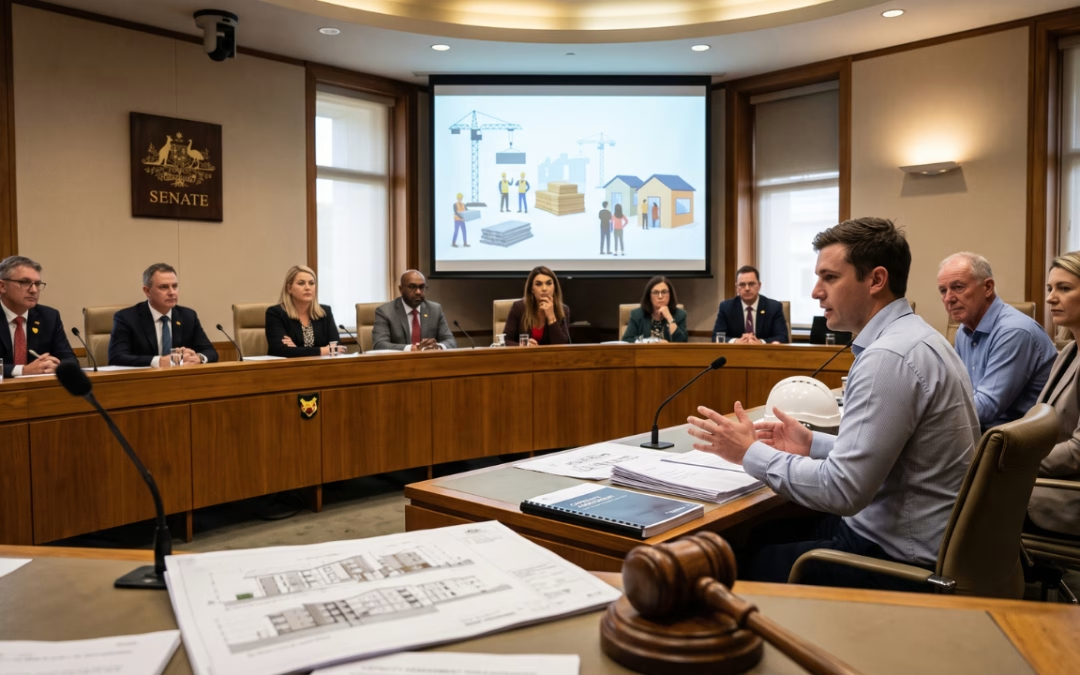
As expected, the proposal has triggered political debate.
Opposition energy spokesperson Dan Tehan criticised Mr Bowen’s comments, arguing that the Minister had not signalled any such plan during the election and warning that such tariffs could harm key industries.
“Before the election, Chris Bowen … said nothing about carbon tariffs. Yet here he is immediately after the election talking about putting them in place,” Mr Tehan said.
At this stage, the government has stressed that no decisions have been made and that further analysis and consultation will occur before any mechanism is introduced.
Balancing Climate Goals with Industry Stability
The government faces a difficult balancing act: progressing its climate agenda while safeguarding industries—like construction—that are already under pressure.
Australia’s safeguard mechanism already places obligations on major domestic polluters to cut emissions or purchase offsets. However, a CBAM would add a new layer of complexity for materials sourced internationally.
Mr Bowen defended the broader strategy, stating that mechanisms like the safeguard are designed to encourage investment in emissions abatement and to prepare Australian industries for a future where low-carbon products are in greater demand.
Meanwhile, the government’s decision to extend the North West Shelf oil and gas licence for another 40 years was heavily criticised by environmental groups—highlighting the competing pressures in Australia’s climate and energy policy.
“The decision … was made according to the very strict criteria of the environmental approvals legislation,” Mr Bowen said, noting that the project is already covered by existing emissions reduction requirements.
Global Context: Australia and the US Diverge
Australia’s potential move towards carbon tariffs comes at a time of shifting global trade dynamics.
The United States recently raised tariffs on steel imports, prompting concern from Canberra. However, Mr Bowen downplayed the influence of the US stance on Australia’s climate plans.
“The United States is around 12 per cent of emissions globally. That’s a lot, but it doesn’t mean that the rest of the 88 per cent of us stop doing things,” he said.
Australia is also continuing its bid to host a future UN climate conference in Adelaide—an event Mr Bowen described as a platform to showcase the country’s economic transition.
What’s Next for Builders?
For now, no carbon tariffs have been locked in—but the direction of travel is clear.
As the government seeks to strengthen Australia’s climate policies, builders should be aware that cost structures for key materials could change in the years ahead.
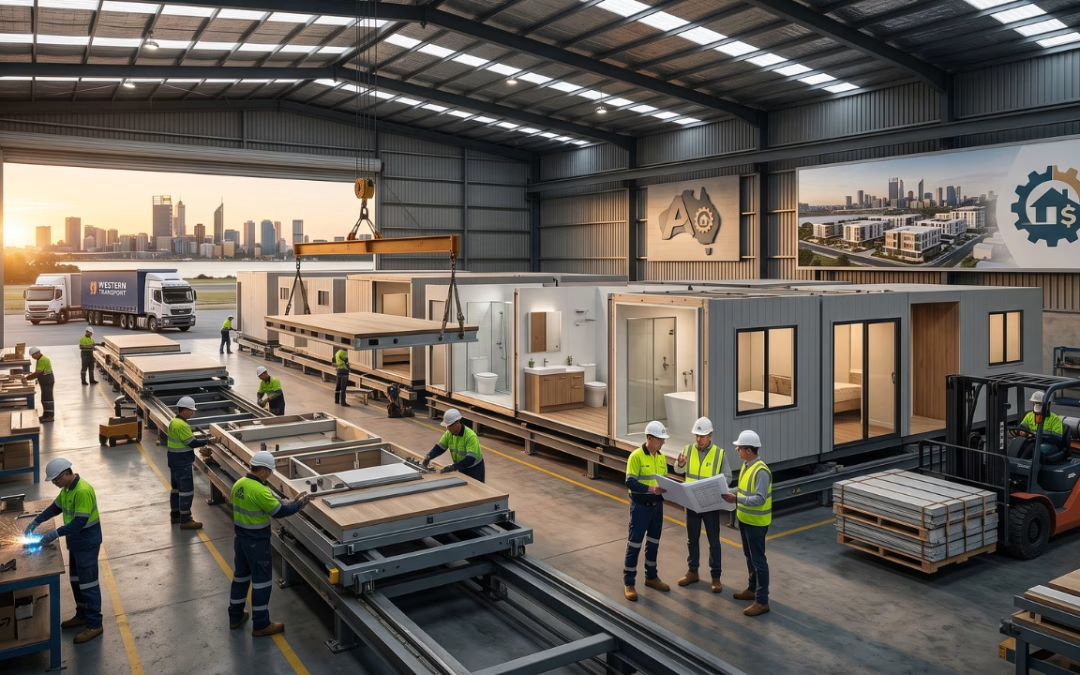
Cement, lime, steel and glass are firmly in focus. Depending on how a CBAM is designed, the flow-on impacts could influence project pricing, supply chain strategies, and competitive dynamics across the building industry.
If you have a story to share about how Australia’s evolving climate policies are impacting your business or projects, we’d love to hear from you.
Get in touch with The Good Builder and be part of the conversation.
Contact us at [email protected]

0 Comments