


The Albanese Government is back—and housing is firmly in the crosshairs. With Labor securing another term following the 2025 Federal Election, their renewed mandate comes with a suite of housing-focused policies that could reshape the building landscape across Australia.
For the construction sector—particularly residential builders—the next chapter promises new opportunity, new pressure, and a renewed focus on delivery. Here’s what you need to know and why it matters.
Key Announcements at a Glance
- 100,000 new homes exclusively for first home buyers
- Nationwide 5% deposit access from 2026
- Shared equity scheme launching in 2025
- Incentives for prefab and modular building
- $78 million to fast-track trade qualifications
First Home Buyer Build Boom?
Labor’s headline policy is a commitment to deliver 100,000 new homes—exclusively for first home buyers. This means no competition from investors and direct funding for enabling infrastructure, land purchases and construction. For builders, this translates into a wave of shovel-ready work backed by government dollars.
But it’s not just the builds—it’s where they’re going. These homes are promised to be “close to work and family”, hinting at urban infill, transit-oriented developments, and key worker corridors—opportunities for volume builders, mid-tiers and even small developers willing to scale fast.
Deposit Scheme Overhaul
In 2026, Labor will remove caps from the Home Guarantee Scheme—no income limits, no cap on applications. All first home buyers will be eligible to buy with as little as a 5% deposit.
For builders, this widens the buyer pool significantly. Expect increased demand in the entry-to-mid range housing market—from townhouses to compact detached homes—especially in fringe suburbs and growth corridors.
And with buyers no longer boxed in by income thresholds, you may see more dual-income professionals finally entering the market—potentially increasing expectations around finish quality, sustainability, and smart home inclusions.
Smaller Mortgages, Bigger Opportunities
Launching later this year, Help to Buy will allow the government to co-purchase up to 40% of a home’s value with the buyer. This means smaller mortgages, lower barriers, and a bigger incentive for builders to tailor stock to this new class of co-funded customer.
Expect to see demand increase for homes priced under the scheme’s eligibility thresholds. This presents an opportunity to offer flexible layouts, modular additions, and high-efficiency builds to buyers who are asset-rich but cashflow-conscious.
Fast-Tracked Builds: Prefab and Modular Push
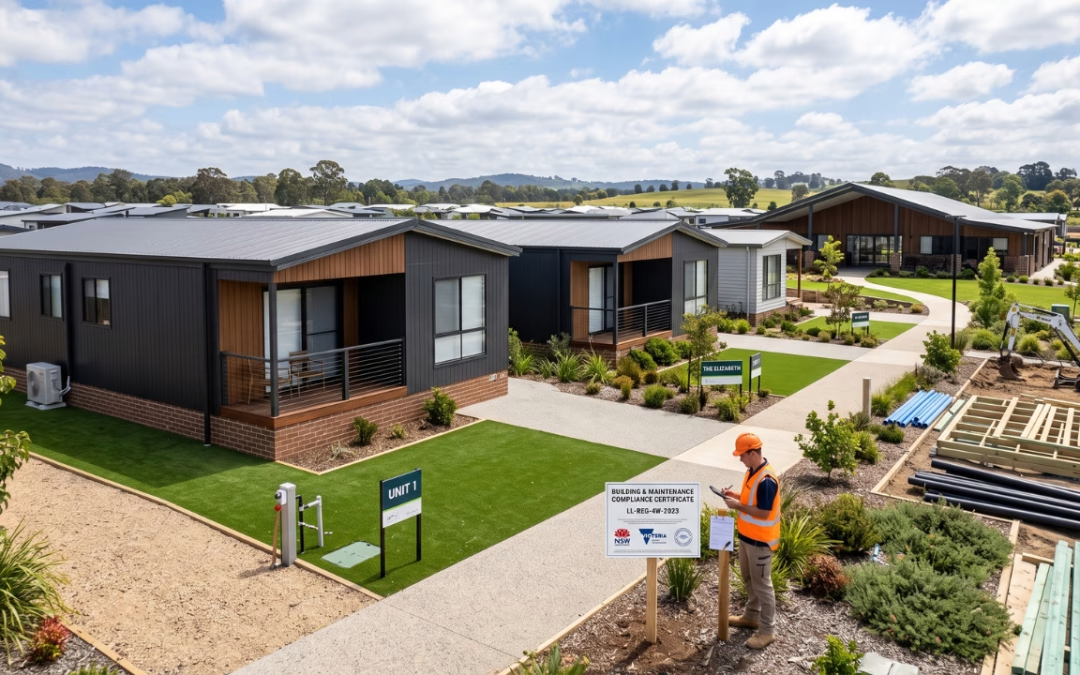
Labor is also investing $54 million into prefab and modular manufacturing—an emerging segment that could alter the pace of construction permanently. Paired with $120 million in incentives for state governments to reduce red tape, the message is clear: speed is now policy.
For builders already exploring modular, this is a signal to go harder. And for those yet to invest in advanced off-site construction, now might be the time to form partnerships, upskill or license technology.
These builds—often up to 50% faster than traditional construction—may soon become the preferred pathway for government projects and affordable housing initiatives.
Tradie Pipeline: 6,000 Workers Fast-Tracked
A further $78 million will fund the Advanced Entry Trades Training Program, recognising experienced workers and helping them gain formal qualifications faster.
For builders facing labour shortages, this is welcome news. It’s not a silver bullet, but it opens the door to legitimising and onboarding experienced workers into formal pipelines—reducing the wait times and risks associated with unqualified subcontractors.
Final Thoughts
Labor’s housing plan is ambitious—and builders sit at the heart of it. The focus is clear: make it faster to build, easier to buy, and cheaper to enter the market.
While challenges remain—supply chains, land access, and local planning constraints—this is arguably the most builder-focused federal policy agenda in a generation.
Want to stay across every policy that affects your builds?
Subscribe to The Good Builder and get the top stories, insights, and updates straight to your inbox.
Visit: thegoodbuilder.com.au/newsletter

Author: The Good Builder
The Good Builder is a media platform that provides news and insights for Australia’s home building industry. From exclusive stories and curated insights to bold industry perspectives, we deliver the news and updates that keep builders, suppliers, and the entire home building industry inspired and ahead of the curve.




0 Comments