


When the new energy rules started rolling in, most builders asked the same question:
How do we scrape to seven stars without blowing the budget?
JG King asked a different one:
What if we could make eight-star homes the default at no extra cost to the buyer?
The answer did not start with more insulation or exotic products. It started with windows.

On The Good Builder podcast, Managing Director John King walked through how a full re-think of their window technology unlocked higher star ratings, brighter homes and genuine comfort for Victorian families without turning designs into dark boxes or pricing people out.
This is the story of that shift and what other builders can learn from it.
The problem: aluminium windows had hit their ceiling
When NCC 2022 and the move to seven-star homes were being debated, JG King had a unique vantage point. They were not just a builder dealing with energy reports, they also ran their own window manufacturing business.
That dual role made one thing painfully clear.
- Most of their long-term range was aluminium.
- They had already pushed into double glazing.
- The systems themselves were the bottleneck.
As John put it, aluminium frames were “really only designed to do the bare minimum in double glazing”. You could squeeze in an 18mm unit, but that was about it – and it simply was not delivering the thermal performance needed for the next jump in star ratings.
In short: they could keep stuffing more insulation into walls and ceilings, or they could attack the weak spot in the building envelope.
They chose the latter.
The pivot: from aluminium to high-performance UPVC
Rather than try to nurse a tired system along, JG King made a big call: after roughly 30 years making aluminium windows, they would re-tool the business around UPVC.
The team went looking for machinery and extrusion systems that could deliver two things:
- Serious performance – frames that could comfortably take deeper, better-insulated glass units.
- A clean, reliable finish – so the product would look and feel like an upgrade to the customer, not a compromise.
They found their answer in Europe, ultimately selecting Italian machinery designed for seamless UPVC joins and high-volume production. That investment effectively rewired one of the core parts of the JG King supply chain.
The result was a completely different type of window leaving the factory:
- UPVC frames with strong thermal properties.
- 24mm double-glazed units as standard, including low-E coatings.
- Hardware and frame designs built around performance, not just minimum compliance.
And once those windows were dropped into real jobs, the numbers changed fast.
The surprise: windows doing the heavy lifting on star ratings
When the new UPVC range started going into houses, the energy modelling told a story John and his team did not fully expect.
With 24mm low-E double glazing in the new frames, typical designs were suddenly:
- Comfortably above seven stars on thermal performance.
- Hitting targets that previously required aggressive insulation upgrades.
In some homes, they could wind insulation back from the “maxed out” levels they had been planning and still get better outcomes than before.
The key realisation was simple but powerful:
If you fix the weakest link in the envelope, the windows, you change the whole game.
From there, the next step followed naturally.
If the window system was already pushing designs over seven stars, why stop there?
Making eight-star the norm without charging extra
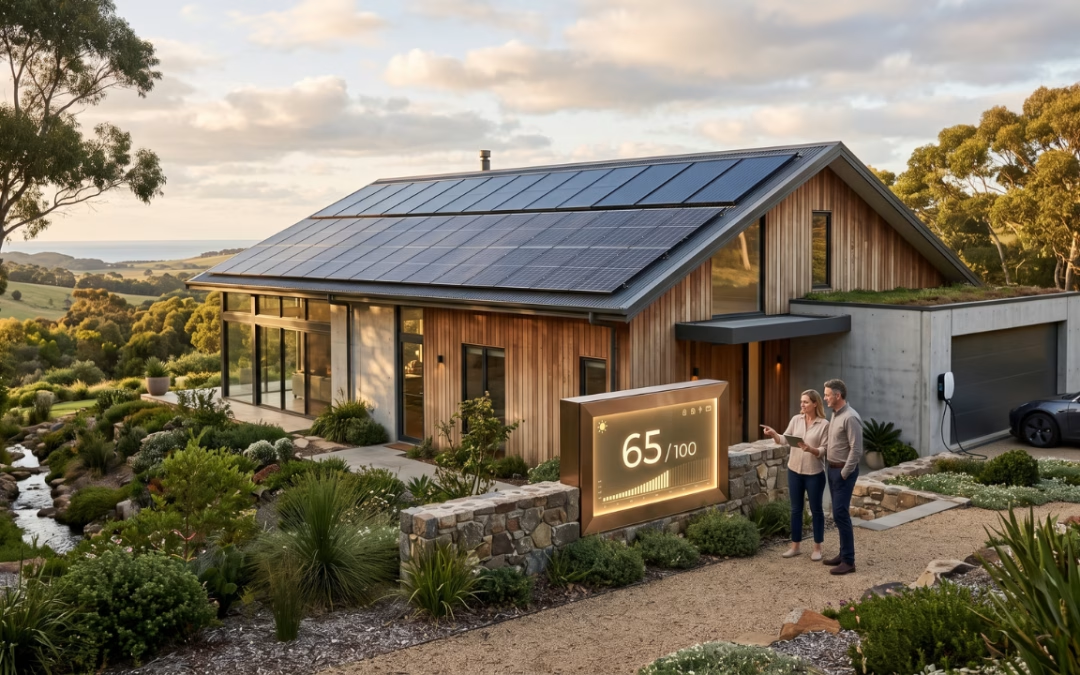
Instead of offering eight-star as an expensive “green upgrade”, JG King re-engineered their standard range so that eight stars became the baseline.
The formula looked something like this:
- Windows:
- UPVC frames.
- 24mm low-E double glazing as standard.
- Insulation:
- Smaller homes often needed only modest tweaks to hit eight stars.
- Larger plans stepped up to stronger wall and ceiling batts, and in some cases additional insulation to utility spaces.
- Whole-of-home thinking:
- Adjusting lighting and appliance choices to push whole-of-home scores towards 100, not just ticking the fabric box.
Because the big performance gains were being driven by windows they were already committed to manufacturing, the business could absorb the cost and present the change as a feature, not a surcharge.
For buyers, that meant:
- Eight-star as a default promise, not a niche product.
- Meaningful reductions in heating and cooling demand baked into the build.
- A home that felt comfortable on day one, not just on a compliance sheet.
In hotter, drier climates such as Mildura, the results are even more pronounced. Some designs are now nudging nine plus stars, edging close to passive house performance in those conditions.
The design win: bigger windows, brighter homes
One of the quiet problems of the seven-star transition has been design compromise.
Because standard aluminium and glass combinations struggle to meet the numbers, many builders have dealt with it by:
- Shrinking windows.
- Dropping glazing from key rooms.
- Trading natural light for a tick on the report.
John is blunt about the downside of that approach. If an architect were starting from scratch, they would never suggest smaller windows as the path to a better home.
High-performance windows flipped the conversation inside JG King:
- More glass, not less – larger openings in living areas and bedrooms.
- Better views and daylight without the heat loss (or gain) penalty.
- Homes where consultants can literally turn the lights off in a display and still show a bright, airy interior – then flick them back on and make it even better.
In other words, performance stopped fighting design and started supporting it.
Why this matters for other builders
Most builders will not go out and buy an Italian UPVC plant tomorrow. But there are clear lessons from what JG King has done.
- Treat windows as your first lever, not your last.
If your glazing package is weak, no amount of extra insulation will rescue you efficiently. Work with your suppliers to lift glass and frame performance before you start hacking at floor plans. - Look at star ratings and whole-of-home together.
It is not just about the building shell. Smarter choices in lighting, systems and appliances can take a good shell to a genuinely efficient home. - Protect design quality.
If the only way you can hit the number is by making homes darker and meaner, something in the spec is wrong. Buyers feel the difference between a compliance-driven box and a light, liveable home. - Use performance as a brand promise, not a technical footnote.
JG King has turned eight-star and near-passive performance in some regions into part of their story as “good builders”, not just another line item in an energy report.
For an industry under pressure to lift standards without killing affordability, the JG King example is a reminder that some of the most powerful moves are both technical and simple:
Fix the weak link.
Back it in at scale.
Make the better option standard, not a luxury.

Author: TGB Editorial






0 Comments