


Summary:
Two large housing developments planned for North Richmond and Grose Wold, NSW, could reshape the Hawkesbury region — yet locals have had no formal say. A new state authority is fast-tracking approvals, bypassing councils and community consultation. While initial proposals were rejected, residents fear it’s only a matter of time before revised plans return.
Developers are circling the Hawkesbury in New South Wales. And if recent events are anything to go by, they could soon reshape parts of this iconic region — with locals locked out of the conversation.
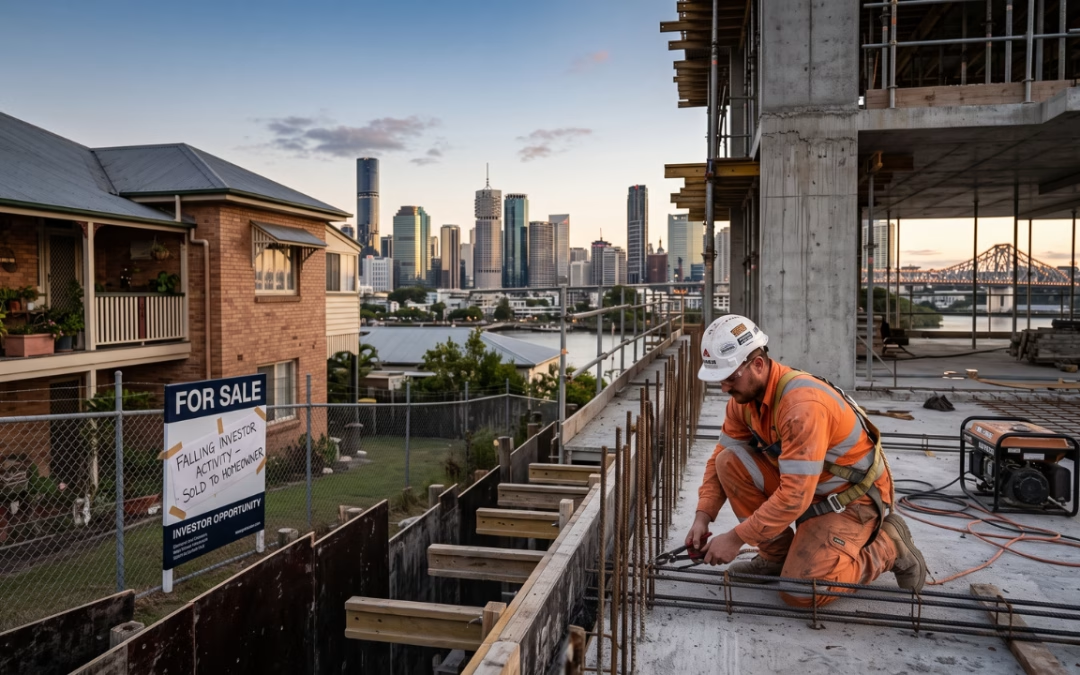
Two separate proposals for high-density housing — totalling nearly 1,300 homes — have already been submitted for Grose Wold and North Richmond, NSW. The sites cover large rural tracts of land north of the Hawkesbury River, an area known for its rural charm and lifestyle.
On paper, these proposals promise housing supply. But on the ground, they risk adding serious traffic, infrastructure, and amenity pressures — all without factoring into existing plans like the new Richmond Bridge traffic modelling.
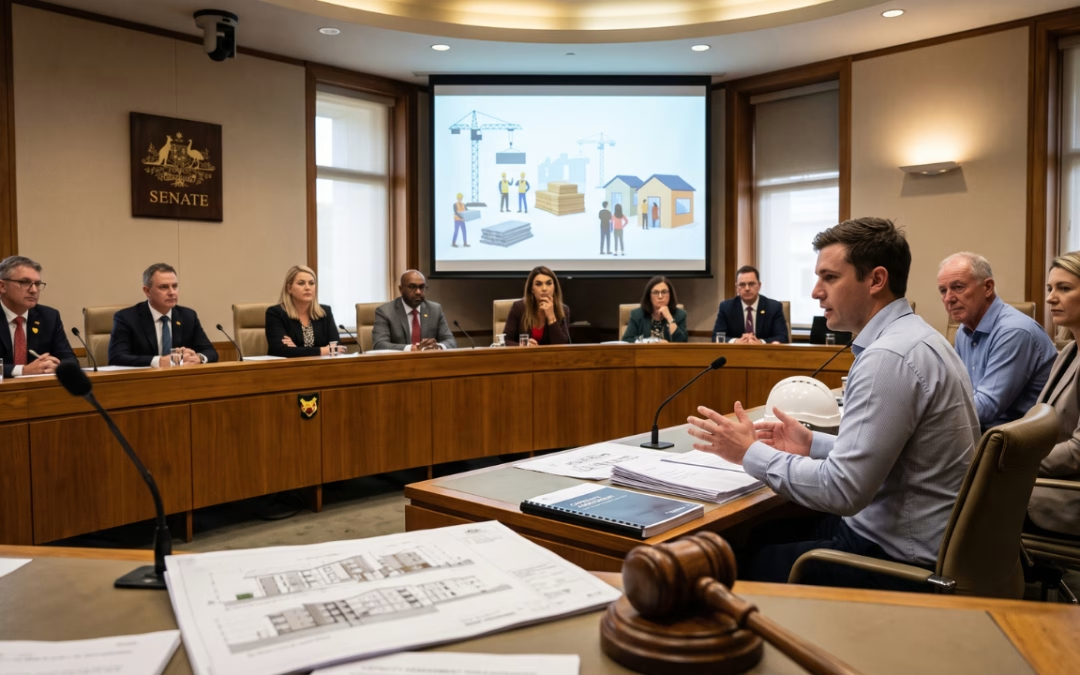
And in a process that has raised eyebrows across the community, these developments weren’t presented to Council or the public. They were quietly submitted through a new state government fast-track channel — the Housing Delivery Authority (HDA) — designed to cut councils and community consultation out of major project approvals.
The New Gatekeeper of Major Projects in NSW
Launched in January by the Minns Government, the HDA gives developers across NSW a new pathway to bypass the traditional planning process.
Any project worth more than $60 million in Greater Sydney or $30 million in regional NSW can now be submitted to the HDA for fast-tracked assessment as “State Significant Development”. If the project ticks the Authority’s internal boxes, it bypasses council scrutiny altogether — heading straight to the NSW Minister for Planning for final approval.
The result? Councils like Hawkesbury City Council often don’t even know these proposals exist unless they happen to find them on the HDA’s website.
“There isn’t even a formal mechanism to keep councils — and thus communities — informed,” a planning expert familiar with the process told the Hawkesbury Post. “The concern is: how many times will developers keep tweaking and trying again until one slips through?”
What’s On The Table?
The two proposals submitted in the Hawkesbury, NSW, paint a clear picture of what’s at stake:
- Belmont Park Estate, Grose Wold: 899 homes proposed
- Catalina Estate, North Richmond: 450 homes on a renowned equine property (opposite Redbank Estate)
Combined, these would bring 1,349 new homes — and likely thousands of new residents — to the area.
Both proposals were initially rejected by the HDA. According to Council information, they failed to meet internal criteria around fast delivery, high-yield housing types, and quality and affordable outcomes.
But rejection doesn’t mean it’s over. There’s currently no limit on how often developers can resubmit revised proposals, and no formal requirement for public consultation along the way. If a revised version eventually meets the HDA’s criteria, it could be declared State Significant and proceed — with the community still locked out of the conversation.
Transparency Fears and Political Backlash
Hawkesbury Council is far from alone in raising concerns.
“We understand that other councils across NSW have also raised the same issue,” said Meagan Ang, Hawkesbury Council’s Director of City Planning, in a memo to councillors last week.
Independent Councillor Nathan Zamprogno was more blunt in his criticism.
“This unelected and unaccountable body were appointed by Labor to say ‘yes’ to as much new housing as possible,” he said. “It says a lot about how meritless these development proposals are that even this new Authority has balked.”
But his bigger concern lies in the process itself:
“Developers are now using backdoor tactics to dodge public scrutiny,” Clr Zamprogno warned. “They’re holding so-called ‘scoping meetings’ with Council to shape their applications behind closed doors, without putting anything on public record. That’s not how planning should work — these processes need to be transparent.”
What Happens Next?
The broader issue for many in the NSW building industry and the community alike is the erosion of trust in the planning system.
Yes, the state urgently needs more housing supply. But bypassing community input isn’t the answer — especially in sensitive regions where infrastructure and services are already stretched.
The Minns Government has pitched the HDA as a way to “reduce the number of large, complex Development Applications councils are required to assess each year.” But critics say that’s simply code for cutting out local voices.
And while both Grose Wold and North Richmond projects were knocked back this time, the process has exposed a concerning new planning dynamic: one where developers can keep coming back again and again, without the public ever knowing when the goalposts may shift.
It’s a live issue — and one that builders, councils, and communities across NSW would do well to watch closely.
Got a Story? We’d Love to Hear From You.
At The Good Builder, we believe transparency, trust, and open conversation matter — especially when it comes to the future of our communities.
If you know of a story like this in NSW or beyond — whether it’s a controversial housing proposal, an infrastructure challenge, or builders doing things the right way — we’d love to hear from you.
Reach out to us.
We’re always looking for more voices and stories to help shape a better building industry — and a better Australia. If you’ve got a story to tell get in touch at [email protected]


0 Comments