

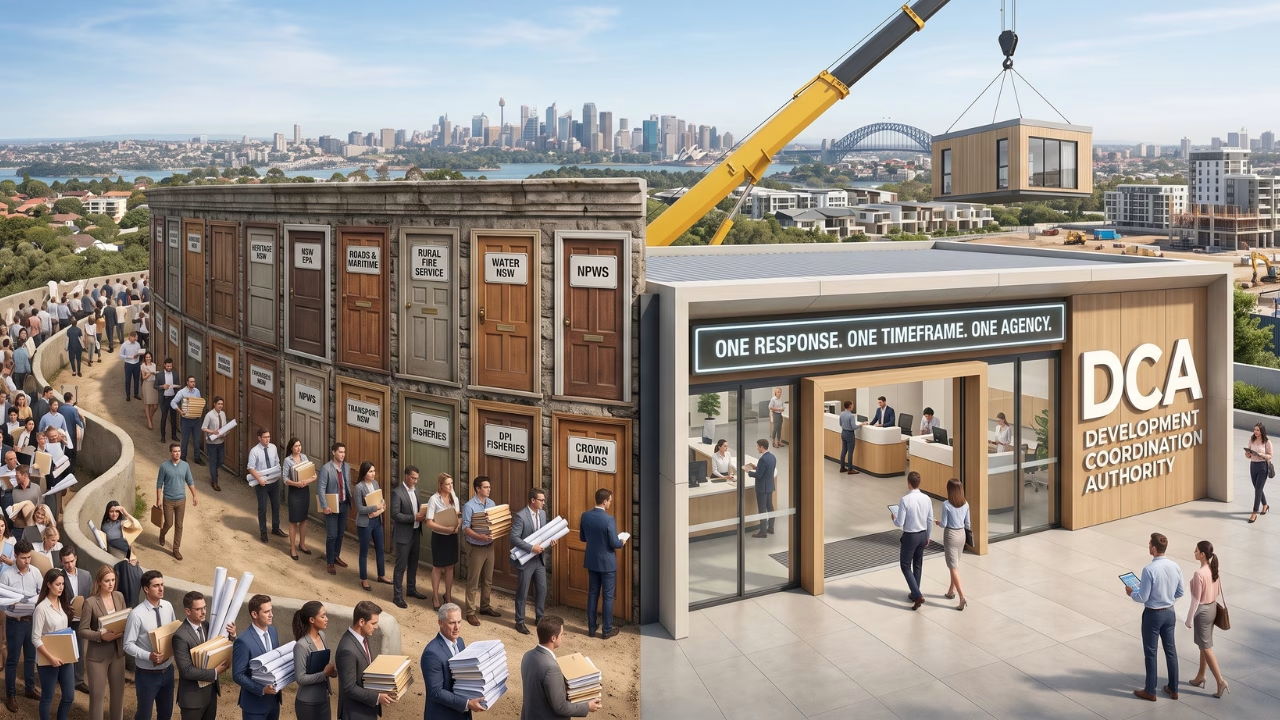
From 1 July, anyone in NSW with a development application that needs state government input deals with a single authority instead of chasing up to 22 of them. Here is what that means on the ground, and where the real bottleneck still sits.
If you have ever had a project stall because it needed sign-off from a handful of state agencies that did not talk to each other, the NSW Government has just made a change aimed squarely at you.
From 1 July, the Development Coordination Authority, or DCA, is operating as a single point of contact for the parts of a development application that need input from NSW Government agencies. Instead of a council or an applicant chasing advice from up to 22 different areas of government, the DCA brings those experts together and issues one coordinated response.

That is the pitch. It is worth understanding what actually changes, what does not, and why the timing matters.
What the DCA does
When a council assesses a development application, it often cannot just decide on its own. Depending on the site, it may need advice or approval from state agencies on traffic, bushfire, flooding, biodiversity, water, heritage, pollution and safety. Each of those referrals used to be a separate conversation with a separate body.
That fragmentation had a real cost. Under the old system, every additional agency referral could add roughly 100 days to the assessment process. Stack a few of those on one application and the delay compounds fast.
The DCA is built to replace that. It pulls experts from up to 14 different NSW Government agencies in-house and gives applicants and councils a single door to knock on. For development applications, the target is a single coordinated government response within 28 days.
It also covers both ends of the process. You can go to the DCA before you lodge, for pre-DA guidance, and after consent, for the post-consent issues that hold up large housing projects once they are approved but before construction can start.
Under the old system, every additional agency referral could add roughly 100 days to the assessment process.
What it does not do
This is the part the media release skips over, and it matters.
The DCA does not approve your project. It is not a consent authority. The council or the relevant determining body still makes the final call on your development application. The DCA’s job is to sort out the state government inputs feeding into that decision, not to make the decision itself.
It is also not a shiny new institution built from scratch. The DCA sits inside the Department of Planning, Housing and Infrastructure. In practice it is the department coordinating its own agencies more tightly, and it grew directly out of the Housing Taskforce the government set up in 2024. That is not a criticism. But if you were picturing a brand new independent umpire, the reality is more of a reorganisation of who talks to whom. It is one strand of the most significant overhaul of NSW’s building framework in years.
The rollout is also staged, not a single switch flicked on 1 July. Stage 1 started back in December 2025, with the DCA handling enquiries and chasing down post-consent delays. The meaningful new power, the ability to issue concurrences and general terms of approval on behalf of other agencies so a single response can go back to the council, is what turns on now in Stage 2.
The number that should get your attention
Buried under the “one-stop-shop” language is a genuinely useful piece of accountability infrastructure.
The DCA publishes an agency league table, an interactive dashboard updated monthly that tracks how each NSW Government agency performs against its referral timeframes. The government’s target is for at least 90 per cent of these to be determined within the agreed time.
Here is the context worth knowing. Through the Housing Taskforce, state agency performance against legislated timeframes already hit 94 per cent for the 2024-25 financial year. So the system was already improving before the DCA formally took over. The league table matters because it keeps that pressure public. If an agency starts slipping, it shows up on a dashboard anyone can see, rather than disappearing into a black box while your project waits.
For a builder or developer, that transparency is more practically useful than any ministerial promise. It tells you where the delays actually are.
Where the real bottleneck still sits
Here is the honest read. Faster agency referrals are a good thing. But the front end of the approval process was never the whole problem.
The bigger issue in NSW right now is approved projects that never start. Research from consultancy Urbis, cited by the Property Council, found that 75 per cent of apartments approved in Metropolitan Sydney since 2020 have not progressed to construction. These are homes that already have their approvals. They are stuck on feasibility: construction costs, finance, and margins that no longer stack up.
A faster approvals process does nothing for a project that is already approved and sitting on hold in the pipeline waiting for the numbers to work. The DCA is aimed at the assessment stage. The commencement gap sits further down the line.
To the government’s credit, the DCA does have a post-consent function specifically for large housing projects, designed to clear the issues that hold up construction after approval. Whether that reaches deep enough to move the commencement numbers is the thing to watch. It will not help much when a dispute stalls a project, but it is at least pointed at the right part of the problem.
How this fits the bigger picture
The DCA does not exist in isolation. It is one piece of a broad reform agenda running alongside the Building Bill, the Transport Oriented Development program, the pattern book approach, and the push into modern methods of construction. The 2026-27 state budget committed the funding to stand the authority up.
The common thread across all of it is the same government trying to get more homes out of a system it has decided is too slow. NSW has committed to 377,000 new homes over five years under the National Housing Accord. That is a target the current rate of building comes nowhere near, and the planning reforms are the government’s main lever for closing the gap.
For builders, the practical takeaway is straightforward. If you have a project that needs state agency input, you now have one number to call and a 28-day clock to hold them to. That is a real improvement over the old runaround. Just keep your expectations calibrated. This fixes coordination at the assessment stage. It does not fix the cost and finance pressures that are keeping approved projects in the ground, and it is worth watching how the wider construction landscape is shifting to understand where the next reform needs to land.
THE GOOD BUILDER TAKE
The door count went from 22 to one, and a 28-day response clock plus a public league table is a genuine improvement on the old agency runaround.
But keep it in proportion. The DCA is a coordination fix at the assessment stage. The thing keeping homes in the ground is feasibility, not referrals. Three quarters of approved Sydney apartments still have not started. A faster front door does not change the maths on a project that is already approved and waiting for the finance to work.
Your Questions Answered
It is a single point of contact within the Department of Planning, Housing and Infrastructure that coordinates NSW Government agency input on development applications. Instead of dealing with up to 22 separate agencies, applicants and councils get one coordinated response.
It was established in two stages. Stage 1 began in December 2025, handling enquiries and post-consent delays. Stage 2, which gives the DCA power to issue concurrences and coordinated approvals on behalf of agencies, began on 1 July 2026.
For development applications, the DCA aims to provide a single coordinated NSW Government response within 28 days. General enquiries receive a reply within two business days.
No. The DCA is not a consent authority. It coordinates state government input, but the council or relevant determining body still makes the final decision on the application.
It is an interactive dashboard, updated monthly, that tracks how each NSW Government agency performs against its referral timeframes. The government’s target is at least 90 per cent determined within the agreed time.
Want the reforms that actually change how you run a job, minus the government spin? Follow The Good Builder for straight-talking analysis of what NSW’s planning changes mean on the tools, and tune in to the podcast for the conversations behind the headlines.
Last updated: July 2026
This article is intended for general information purposes only and does not constitute legal, financial, or professional advice. Laws, regulations, and industry requirements vary by state and territory and change over time. Builders and trades professionals should seek independent advice relevant to their specific circumstances before making business, legal, or financial decisions.
Sources: NSW Government ministerial release “A faster and easier planning system for NSW” (1 July 2026); NSW Planning Portal, Development Coordination Authority and Agency League Table pages (accessed July 2026); Mills Oakley and Lindsay Taylor Lawyers analyses of the Planning System Reforms Act 2025; Urbis research on Metropolitan Sydney apartment commencements as cited by the Property Council of Australia.

Author: TGB Editorial




0 Comments