


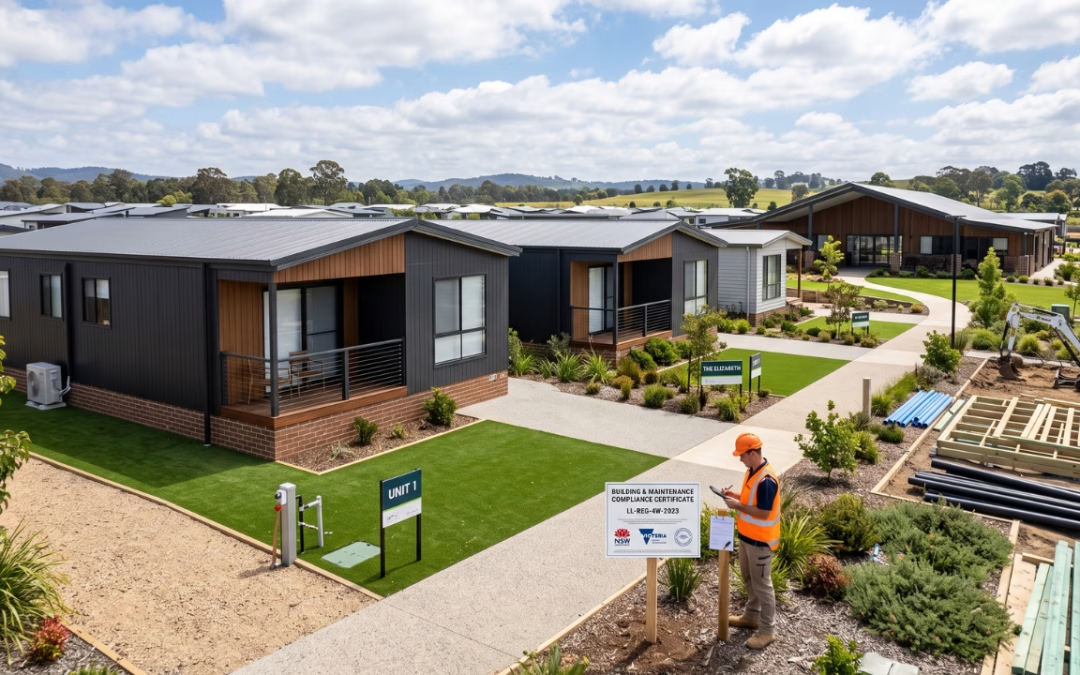
A Melbourne based manufacturer is shaking up the Australian housing sector with a breakthrough prefab system capable of delivering fully insulated three bedroom homes in just a few hours for as little as $75,000.
The innovative panel based construction method, developed by a local team led by James Coghlan from PanelTech Systems, could redefine affordability and efficiency in residential building. Each home is constructed using large interlocking panels made from bonded scrap wood chips and polystyrene insulation, creating air and water tight dwellings that are both energy efficient and durable.
“This is a 70 square metre house, but the design and vaulted ceilings make it feel much more spacious,” Coghlan said. “Australia has been lagging behind in this space. Prefab systems like this have been mainstream in Europe since World War Two.”
Speed Meets Sustainability
Unlike traditional construction, which can take months or even years depending on material availability and labour, the new system allows for assembly in hours. Builder David Hynes of Hycon Homes, one of the early adopters of the technology, has already built 12 homes using the system and says the results are game changing.
“Heating and cooling costs are reduced significantly, and the comfort levels are outstanding,” Hynes explained. “You get a constant temperature all year round. It is a completely different living experience.”
Hynes believes the system is not just a speed solution but an answer to both housing affordability and sustainability.
“The embodied carbon in these panels is far lower than traditional brick or block construction,” he said. “They are made from recycled timber waste and high efficiency insulation, so you are not just building faster, you are building smarter.”
Prefab Homes Gain Ground
Prefabrication has long been viewed as the future of efficient construction, but its adoption in Australia has been slow. In 2013, prefab accounted for just 3 per cent of national builds. Today that figure has more than doubled to 8 per cent, and industry experts predict it could reach 30 per cent within five years.
Construction expert Damien Crough says the technology is ready for mainstream acceptance.
“Prefabricated homes meet all Australian Standards and the National Construction Code,” Crough said. “They perform just as well, if not better, than traditional homes. They are simply built in a more controlled and efficient way.”
This momentum has caught the attention of governments too. The Victorian Government now views prefab housing as critical to boosting supply, with population forecasts showing more than 10.3 million residents expected to call the state home by 2051.
A Solution to Australia’s Housing Crisis
With housing affordability and supply under intense pressure, prefab systems like those produced by PanelTech Systems could offer a realistic alternative. Granny flats, social housing and full suburban developments could benefit from the technology’s low cost and high speed.
For comparison, the average construction cost of a new detached home in Australia sits at around $400,000, often taking nine to twelve months to complete. PanelTech’s system could cut that cost by more than 80 per cent and compress the build time from months to a single day.
The implications for regional and remote housing are particularly significant. Reduced labour dependency, lower material waste and minimal site disruption make prefab construction ideal for communities struggling with trade shortages and inflated costs.
Innovation Meets Opportunity
Australia’s construction sector has faced three years of disruption from labour shortages to supply chain blowouts. But the rise of locally made prefab technology signals a shift from survival to innovation.
“This is the kind of thinking that can move the needle,” says The Good Builder Founder, Aaron Ng. “When you have builders like David Hynes backing new systems and manufacturers pushing the boundaries of what is possible, you are not just building homes faster, you are rebuilding confidence in the industry.”
The Good Builder Perspective
At The Good Builder, we believe these stories matter. While mainstream headlines often focus on delays and insolvencies, the real progress lies in innovation like this, technologies that make housing more accessible, sustainable and achievable for everyday Australians.
Prefab is not the future, it is already here. And for forward thinking builders, it is time to pay attention.




0 Comments