


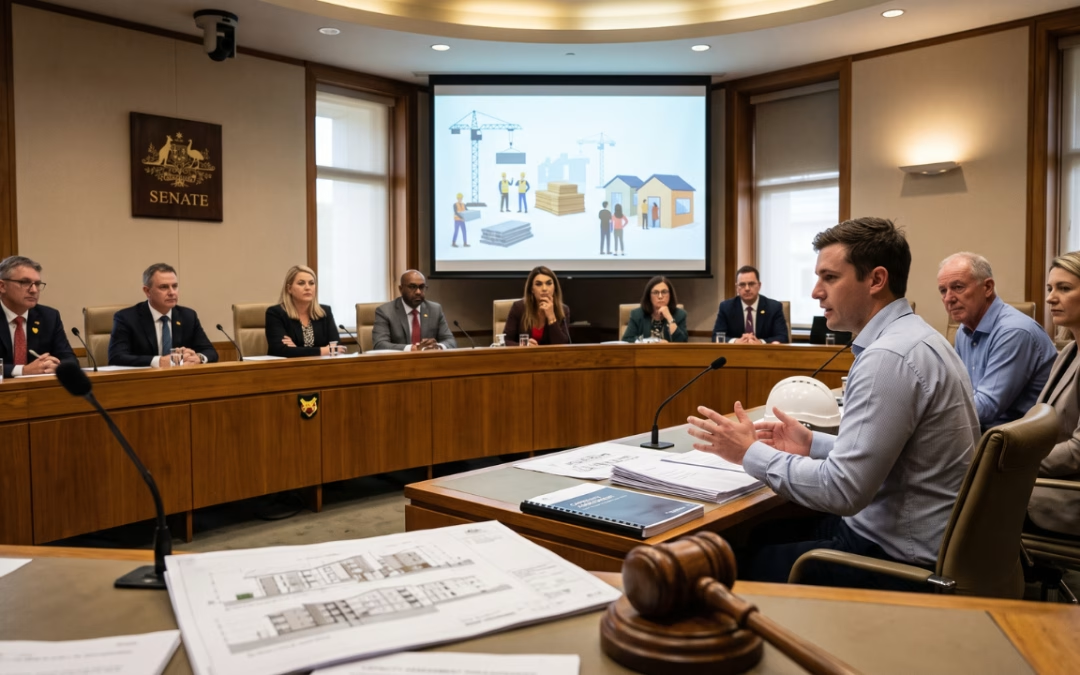
Queensland’s construction sector is facing a critical productivity problem, according to a new interim report from the Queensland Productivity Commission. The report outlines steep declines in industry output and rising project costs, pointing to regulatory barriers and procurement complexity as the primary culprits, not the builders on the ground.
Since 2018, construction productivity has dropped by nine percent, contributing to a shortfall of 77,000 homes across the state. The report singles out the former government’s Best Practice Industry Conditions (BPICs) as a key factor, warning that if left in place until 2029–30, BPICs could cost the Queensland community up to $20.6 billion, lead to 26,500 fewer homes, and push rents up by over eight percent.
“The industry today needs nine percent more labour than it did in 2018 to produce the same level of output,” the QPC report states.
The Data Behind the Delay
The interim report outlines a significant drop in construction sector performance, with labour productivity barely five percent higher today than it was in 1995. By contrast, productivity across the broader economy has surged by 65 percent in the same period.
It found no evidence that BPICs have delivered improvements in site safety, despite imposing additional compliance costs and contributing to widespread project delays. In fact, the report revealed some stakeholders refused to participate in the inquiry out of “fear of reprisals,” highlighting cultural issues within the industry.
What Ministers Are Saying
Deputy Premier and Minister for Industrial Relations Jarrod Bleijie was direct in his remarks.
“We already knew that productivity on Queensland job sites fell through the floor under the former Labor Government, enabled through their mates in the militant CFMEU,” he said.
“Last year we also took immediate action by suspending BPIC – the CFMEU tax, which caused worksites to be shut down for nearly a third of the year.”
While acknowledging the importance of safe and fair working conditions, Bleijie emphasised that “safe worksites can also be productive.”
Treasurer David Janetzki said the interim findings support the government’s decision to pause BPICs and re-establish the Productivity Commission.
“This initial modelling confirms the concerns raised by the industry about poor productivity within the construction sector,” Janetzki said.
“These early signs justify the Crisafulli Government’s re-establishment of the QPC and its initial Construction Inquiry which is examining conditions in the construction sector and identifying ways to improve the industry and boost productivity.”
Housing Minister Sam O’Connor added that the report supports the government’s reform strategy, including modernising the QBCC and cutting unnecessary red tape.
“Our action to indefinitely pause BPICs, bring the Queensland Building and Construction Commission into the 21st century, and cut red tape to make it easier to do business with government were the first steps to deliver the homes and infrastructure our state needs,” O’Connor said.
“Queensland needs to be the building capital of the nation.”
What Builders Should Do Now
The QPC’s report is not a criticism of builders. It is an invitation to be part of the solution.
Here’s how builders can engage:
- Conduct internal audits: Identify where productivity is being lost on site. Are workflows clear? Are trades coordinated? Are delays linked to compliance or material bottlenecks?
- Push for supplier alignment: Engage with your supply chain to uncover friction points and work on solutions together.
- Contribute to the final QPC report: Submissions remain open. Builders on the ground are best placed to describe what’s slowing them down and what’s working.
- Track and share success stories: If your team has improved timelines or reduced rework through smarter processes, let industry bodies and government know. These examples will help shape better regulation.
Final Report Coming in October
The Queensland Productivity Commission is expected to deliver its final report in October after further consultation. This will likely shape future government procurement, regulation and industry engagement.
Builders should see this as a rare window to influence long-term reform.
The Good Builder’s View
The builders we speak to every day are not lazy, inefficient or overpaid. They are stuck in a system that often adds cost without adding value.
This report confirms what many already suspected. Productivity has been throttled not by the people doing the work but by the layers of complexity and control that have crept in from the top.
We support the QPC’s focus on transparency, procurement reform and meaningful consultation. And we urge every builder to speak up, share their experience and help redesign a system that works for everyone.
If Queensland wants to build faster, better, and more affordably, it starts with listening to the people who actually build.



0 Comments