


The Tasmanian Government has introduced legislation aimed at halting the implementation of new changes to the National Construction Code in an effort to reduce red tape, provide greater certainty to builders, and ease cost pressures on home buyers.
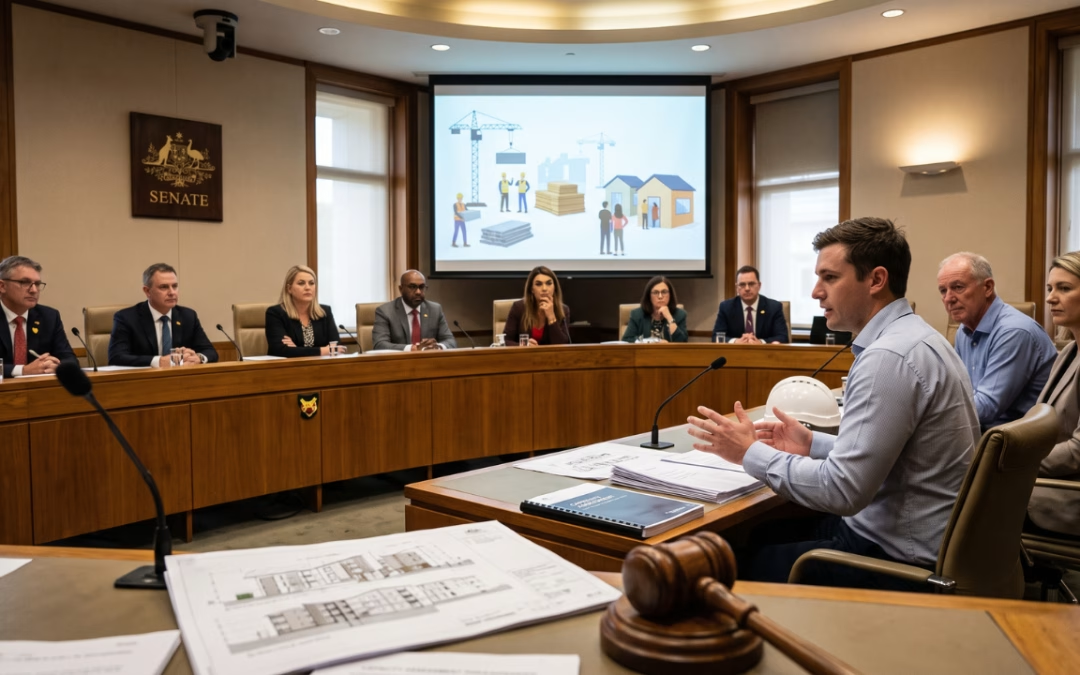
The proposed Building Amendment Bill 2026, announced by Guy Barnett, Minister for Small Business, Trade and Consumer Affairs, will be introduced in the first week of Parliament. The Bill seeks to effectively freeze additional National Construction Code updates at a state level, with the Government arguing that recent and ongoing changes are adding complexity, delays and cost to residential construction.
A push for regulatory certainty
The National Construction Code, developed nationally and adopted by states and territories, sets minimum technical standards for the design and construction of buildings in Australia. Updates to the Code often address issues such as energy efficiency, safety, accessibility, structural performance and sustainability.

However, the Tasmanian Government says the pace and scale of recent amendments have created additional compliance burdens for local builders.
Minister Barnett said the new legislation would provide “greater certainty for the construction industry and home builders” and allow the sector to focus on delivering much-needed housing rather than navigating further regulatory adjustments.
“We’re standing up for consumers and industry by stopping federal red tape and costly changes being imposed on Tasmanians,” he said.
According to the Government, freezing further changes to the Code will reduce the risk of cost escalation driven by new compliance requirements, design modifications and supply chain adjustments.
The measure is framed as a practical response to housing affordability pressures and construction industry capacity constraints.
Industry backing
The policy has received public support from peak building bodies in Tasmania.
The Housing Industry Association’s Tasmanian Executive Director, Ben Price, described the move as nation-leading reform that gives builders certainty at a critical time for the sector.
Similarly, Master Builders Tasmania Chief Executive Officer Jenna Cairney said that legislating a pause on new residential Code changes would help reduce red tape and save home builders money, potentially contributing to increased housing supply.
Industry stakeholders have long raised concerns about cumulative regulatory changes adding incremental costs to housing. These include energy efficiency requirements, changes to livable housing design standards, and updates to condensation management and waterproofing provisions in recent Code cycles.
For smaller builders in particular, adapting to each Code revision can require new training, revised documentation, updated contracts and coordination with consultants and certifiers. These adjustments can add both direct and indirect costs to projects.
Balancing cost and standards
The Tasmanian Government has characterised its approach as balanced, emphasising that the objective is not to weaken standards, but to prevent what it sees as unnecessary cost increases during a period of housing supply pressure.
“We are taking a sensible, balanced approach – making sure we can build the homes we need now, while planning carefully for the future,” Minister Barnett said.
The move comes amid broader national debate over the role of regulation in housing affordability. Proponents of Code updates argue that improvements in energy efficiency, resilience and accessibility can reduce long-term costs for occupants and improve building performance over the life of a home.
Critics, however, contend that frequent regulatory shifts create short-term cost spikes and design complexity that can slow housing delivery.
Tasmania’s proposed legislation highlights this tension: how to maintain modern building standards while ensuring that new compliance requirements do not inadvertently constrain supply or price prospective buyers out of the market.
Housing supply context
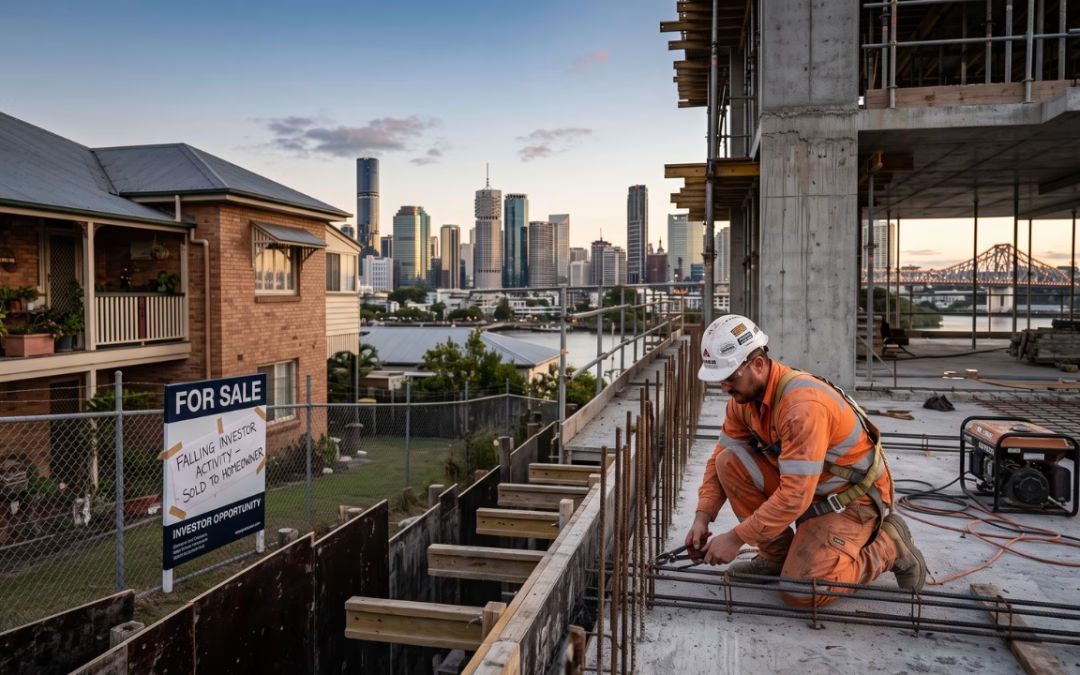
Like many states, Tasmania faces housing availability challenges, including rental shortages and affordability pressures. Construction sector capacity has also been tested in recent years by labour shortages and material cost volatility.
Builders have reported that regulatory certainty is a key factor in forward planning. When design standards are stable, it becomes easier to price work accurately, train staff consistently and negotiate supply agreements with confidence.
A legislated pause on further National Construction Code changes could allow builders to operate under a more predictable framework in the short to medium term.
However, the details of how the freeze will operate in practice, and how it will interact with national agreements and intergovernmental arrangements, are likely to be closely examined once the Bill is introduced.
Intergovernmental considerations
The National Construction Code is developed by the Australian Building Codes Board in consultation with states and territories. Each jurisdiction is responsible for adopting and applying the Code within its own legislative framework.
Tasmania’s proposed amendment raises questions about how state-based implementation may diverge from national settings.
If passed, the Building Amendment Bill 2026 would signal a willingness by the Tasmanian Government to assert greater control over the timing and application of Code changes within the state.
Such an approach may prompt discussion among other jurisdictions facing similar cost pressures, particularly if Tasmania’s model is seen to improve delivery timelines or housing affordability outcomes.
At the same time, industry participants operating across multiple states often favour harmonised standards to simplify compliance and reduce duplication. Divergence between jurisdictions can create its own complexity, particularly for larger builders or product suppliers working nationally.
Implications for builders and home buyers
For residential builders in Tasmania, the immediate effect of the proposed legislation would be increased regulatory stability.
A pause on additional Code changes means:
• Reduced need for frequent design adjustments
• Less retraining on new compliance requirements
• Greater cost certainty in quoting and contracts
• Potential reduction in approval delays linked to transitional Code phases
For home buyers, the Government argues that the benefits will be seen in lower overall construction costs and fewer delays in project delivery.
However, any longer-term impacts on building performance standards, particularly in areas such as energy efficiency and sustainability, will likely form part of ongoing policy discussions.
What happens next?
The Building Amendment Bill 2026 is set to be introduced in the first week of Parliament. Debate is expected to centre on the balance between cost control and regulatory progression.
Industry bodies have made their support clear, emphasising the need for certainty during a period of economic adjustment.
Whether the legislation passes in its current form will depend on parliamentary deliberations, but the announcement alone signals that regulatory reform remains firmly on the housing policy agenda.
For Tasmania’s residential construction sector, the coming months will determine whether the proposed pause delivers the intended outcome: fewer compliance layers, reduced costs, and a clearer pathway to building the homes the state needs.

Author: TGB Editorial



0 Comments