


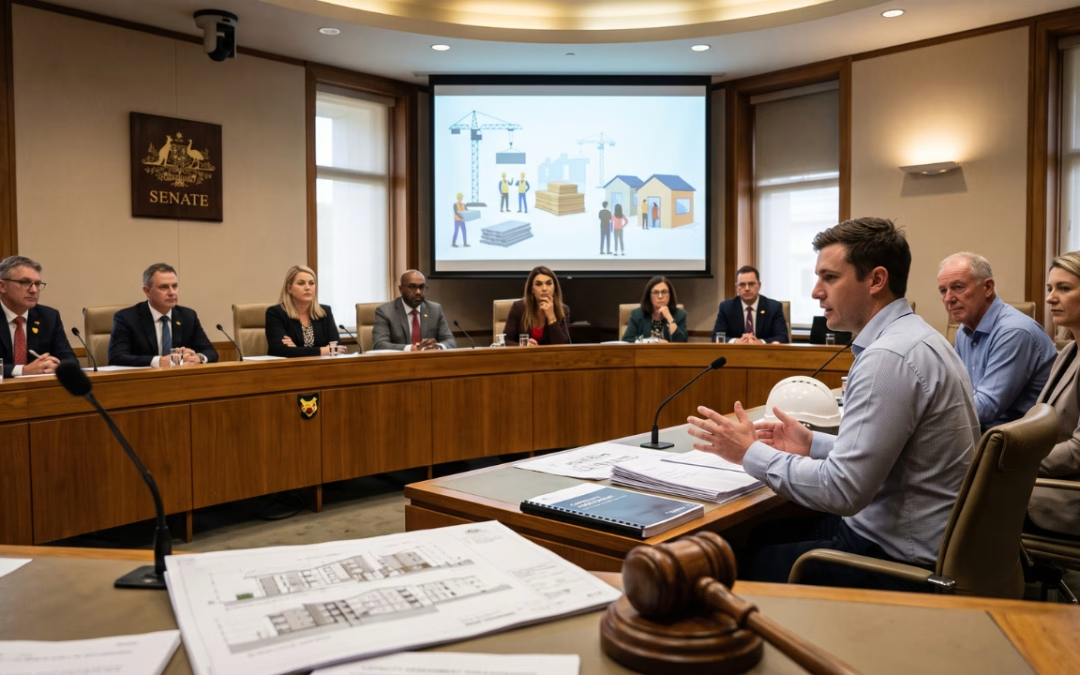
On 1 October 2025, all eyes in Queensland’s construction industry will turn to Courtroom 17 at Brisbane Magistrates Court. It’s there that the Commission of Inquiry into the CFMEU and Misconduct in the Construction Industry will officially open its public hearings, an event that could reshape the conversation around unions, compliance, and culture in building for years to come.
A Public Inquiry with Weight
Commissioner Stuart Wood AM KC has confirmed that the hearings will begin with a formal reading of the Terms of Reference, followed by opening statements from himself and Senior Counsel Assisting, Liam Kelly KC. No witnesses will appear at the first session, but the stage will be set for what promises to be a rigorous and highly scrutinised process.
“This Commission of Inquiry serves an important public interest for Queensland,” Mr Wood said.
“The construction industry plays a vital role in the state’s economy and the wellbeing of workers and their families. All Queenslanders deserve workplaces that are safe, respectful and operate within the framework of the law.”
For builders, subcontractors and suppliers, this statement sets a clear tone: the inquiry isn’t just about union conduct, but about industry culture more broadly.
Why It Matters to Builders
The construction industry has long wrestled with the balance between industrial muscle and business certainty. For many small-to-mid builders, the day-to-day reality is dealing with site stoppages, disputes, or compliance headaches that ripple down supply chains.
The inquiry’s Terms of Reference are broad, giving the Commission scope to explore not only alleged misconduct within the CFMEU, but also how practices impact safety, productivity, and the reputation of the sector.
For builders, that means two things:
- Closer scrutiny of workplace practices.
Expect a spotlight on safety standards, subcontractor treatment, and the ways disputes are handled on site. - Potential policy or regulatory changes.
Depending on the findings, the inquiry could lead to reforms that affect how projects are managed, tendered, and delivered in Queensland.
Open Justice, Public Engagement
Transparency is at the heart of the process. Hearings will be livestreamed via the Commission’s website, and transcripts will be made available after each session. Members of the public including builders, tradies, and suppliers are being encouraged to make submissions if they have relevant information.
This openness matters. In an industry where trust has often been eroded by half-truths and behind-closed-doors deals, public scrutiny offers a chance to reset.
The Bigger Picture
The inquiry lands at a pivotal time. Queensland is pushing hard to deliver more homes through the Residential Activation Fund and other government programs. Builders are under pressure to increase capacity, while still navigating rising costs, skills shortages, and complex approval frameworks.
In this environment, the stability of worksites and industrial relations can’t be an afterthought. Builders need certainty to plan projects, retain staff, and maintain client confidence. The inquiry’s outcomes could influence how industrial relations shape that certainty over the next decade.
A Divisive but Defining Moment
While some see the inquiry as long overdue, others worry it risks dragging the industry further into conflict rather than resolution. Union advocates argue that strong worker representation has historically improved safety and conditions. Critics point to allegations of intimidation, unlawful conduct, and the potential stifling of productivity.
What’s clear is that the Commission is not about taking sides, it’s about shining a light on practices that affect every player in the building ecosystem, from apprentices through to Tier 1 contractors.
What Comes Next
The first hearing on 1 October is largely ceremonial, but the real work begins shortly after. Subsequent hearings where witnesses will give evidence under oath, will determine just how deep and widespread the problems are.
For builders, this is more than a political or legal event. It’s a moment that could influence everything from subcontractor negotiations to site culture and compliance frameworks.
The Good Builder community will be watching closely, bringing updates and industry perspectives as the inquiry unfolds. For now, the best step builders can take is to stay informed, consider their own site practices, and be ready for a period of significant scrutiny and possible reform.

0 Comments