


The draft plan for the former Southern Cross University site firms up one of the region’s biggest post-flood housing projects. Here is where it stands and what builders should be watching.
The East Lismore flood recovery site now has a masterplan, and the numbers have grown.
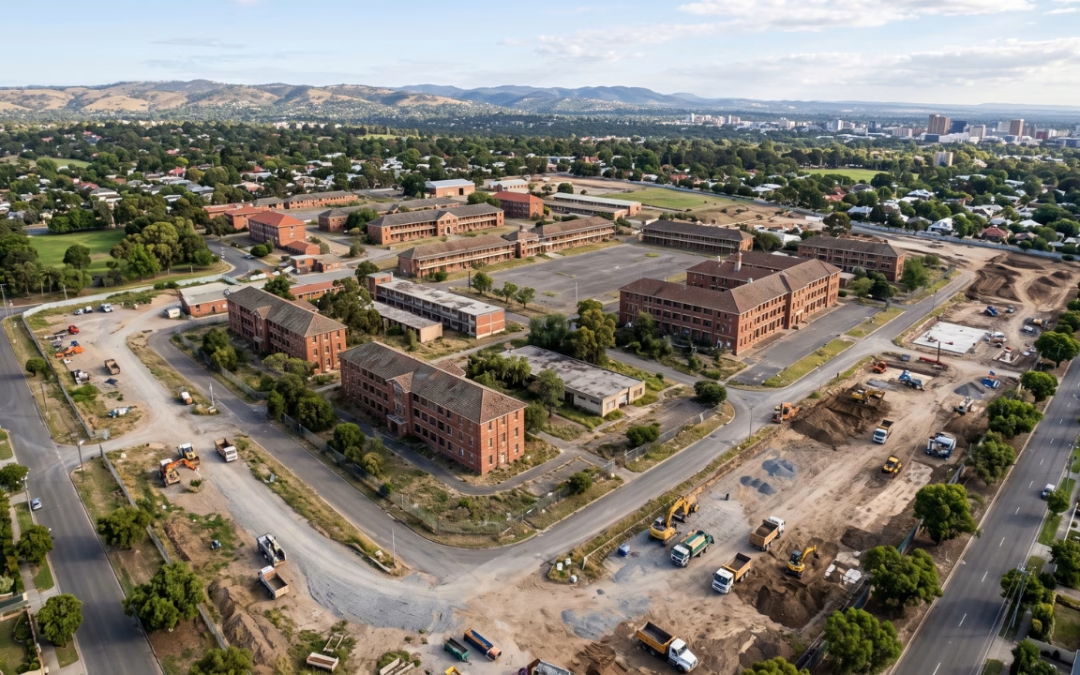
A draft masterplan released on 20 July proposes more than 500 flood-resilient homes across the 72-hectare site at Crawford Road, up from the 400-plus figure attached to the project when the land was first secured. Feedback is open until 16 August, after which the plan will be refined ahead of detailed designs and development applications.

For anyone following the Northern Rivers recovery, this is a familiar piece of ground. This is the same site where 72 hectares of flood-free land in East Lismore was secured to unlock more than 400 new homes back in 2025. What has changed is that the project has moved from land acquisition into planning, and the detailed design work has lifted the potential yield.
That progression matters more than the headline number. Land being secured is a commitment. A masterplan open for consultation is a project starting to take physical shape.
What the masterplan actually proposes
The draft plan sets out a mixed community rather than a uniform housing estate.
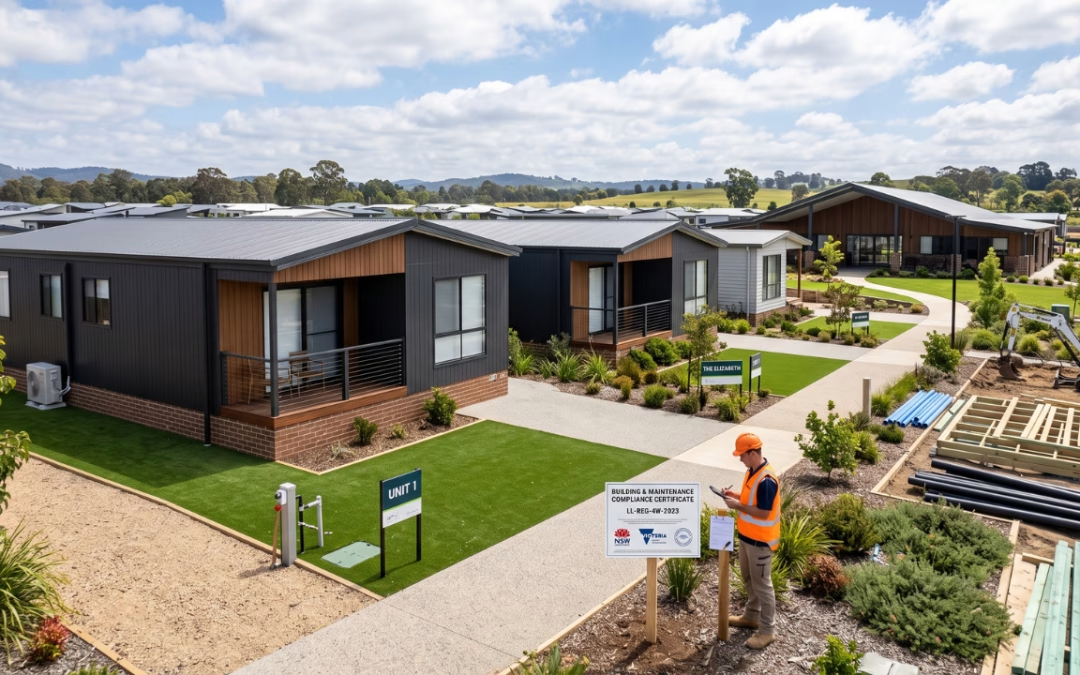
It proposes a spread of housing types, including terraces, duplexes, freestanding homes, and buyback homes being relocated onto flood-free land, aimed at a range of budgets and lifestyles. At least 20 per cent of the homes are earmarked as affordable housing for low to moderate income households.
Eligible participants in the Resilient Homes Program buyback scheme get priority access to land and homes before anything is released to the broader market. That early-access clause has been a consistent feature of the East Lismore plan since the outset, and it addresses a real risk in a region where post-disaster demand has kept prices tight.
The design brief leans hard into resilience. The plan calls for increased tree canopy, water-sensitive urban design, walkable streets, and homes positioned away from flood-prone areas. For a community that has lived through repeated flood events, that is not a marketing line. It is the entire point of moving to higher ground.
Land being secured is a commitment. A masterplan open for consultation is a project starting to take physical shape.
Stage 1 is already in front of council
The masterplan is not the only thing moving.
Planning for Stage 1, roughly 100 homes on a five-hectare portion at the northern end of the site, is progressing in parallel and is currently being assessed by Lismore City Council. That is a useful signal for builders. It means the project is not waiting on the full masterplan to be finalised before the first parcel of work advances.
Next door, a separate build-to-rent project is already under construction. Fifty apartments broke ground in November, foundations are down, and work has shifted to the main building structures with completion targeted for late 2026, weather permitting.
So the site is not a concept on paper. There is active construction beside it and a first residential stage in the assessment pipeline.
Where this sits in the wider recovery
East Lismore is one piece of a much larger post-flood building program across the Northern Rivers.
The same recovery effort has driven buyback homes being relocated onto flood-free land, and the ongoing repurposing of flood buyback land across the region for community and commercial use. Each of these programs is creating construction activity in markets that were quieter before 2022.
This is part of a broader pattern of post-disaster investment reshaping regional construction demand across NSW. For builders, the important characteristic is that it is not speculative. It is publicly funded, community-directed work with a defined delivery mandate and a clear pipeline.
What builders should watch
The practical opportunity here follows a predictable sequence.
Large master-planned projects move through community consultation, concept planning, design development, and then procurement. East Lismore is currently sitting between consultation and design development, with Stage 1 slightly ahead of that curve. The earlier a builder understands where a project is in that sequence, the more prepared they are when the work becomes available.
A few things worth tracking. The consultation window closes on 16 August, and the feedback shapes the final plan, so the housing mix and lot configuration are not locked yet. Stage 1’s assessment by Lismore City Council will be the first real indicator of timing. And the relocated buyback homes built into the plan carry their own line of work, since every relocated dwelling needs re-levelling, services reconnection, and compliance sign-off in its new location.
For builders with capacity in the region, the value is in reading the sequence correctly and being positioned before procurement, not after.
The Good Builder Take
The East Lismore masterplan is a genuine step forward, but the real story is the pace of a recovery that has been years in the making. This site took time to acquire, time to negotiate, and time to fund the infrastructure that makes it viable. That is the unglamorous reality of turning approved land into built homes.
For builders, the lesson is the one that keeps repeating across the Northern Rivers. The demand is real and publicly backed, but it rewards the operators who understand the planning sequence and get positioned early. The homes are coming. The question is who is ready to build them.
Frequently asked questions
The draft masterplan proposes more than 500 flood-resilient homes across the 72-hectare Crawford Road site, up from the 400-plus figure attached when the land was first secured.
Feedback on the draft masterplan is open until Sunday 16 August 2026. All feedback will be used to refine the final plan ahead of detailed designs and development applications.
Stage 1, around 100 homes on a five-hectare portion, is being assessed by Lismore City Council. A separate build-to-rent project of 50 apartments is already under construction next to the site, targeting completion in late 2026.
Eligible participants in the Resilient Homes Program buyback scheme have priority access to land and homes before they are released to the broader market.
The plan proposes a mix of terraces, duplexes, freestanding homes, and relocated buyback homes, with at least 20 per cent set aside as affordable housing for low to moderate income households.
Listen to The Good Builder Podcast on Spotify for more on how the Northern Rivers recovery is reshaping regional construction.
This article is intended for general information purposes only and does not constitute legal, financial, or professional advice. Laws, regulations, and industry requirements vary by state and territory and change over time. Builders and trades professionals should seek independent advice relevant to their specific circumstances before making business, legal, or financial decisions.

Author: TGB Editorial





0 Comments