


A Landcom development in Sydney’s north-west has become the first on-ground test of the NSW Government’s push to mainstream modern methods of construction. The results will matter well beyond this site.
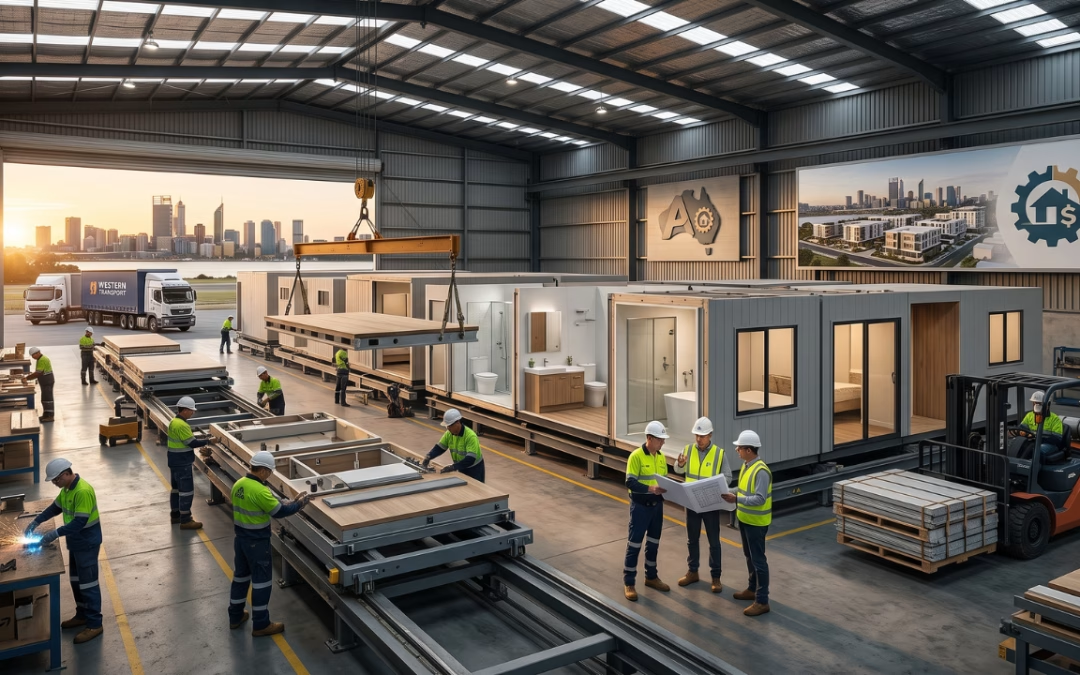
Nine two-storey, three-bedroom terraces are being built in sections at a factory, transported to a site in Schofields, and craned into position.
That process, known as volumetric modular construction, is not new. But the context around this particular project is.
The homes form part of Landcom’s Burdekin Road development in Sydney’s north-west, which is targeting around 140 homes in total across a mix of terraces, manor homes, and compact housing close to transport, jobs, and services. At least 30 per cent of homes across the development will be affordable housing. Construction on the modular terraces is expected to be complete by August 2026.
The project is the most visible on-ground demonstration of the NSW Government’s push to integrate modern methods of construction into mainstream residential delivery, and it arrives at a moment when that push has real legislative weight behind it.
What Is Actually Being Built
The nine terraces are being manufactured in a controlled factory environment with quality and safety checks built into the production process. Large sections of each home are built off-site before being transported and installed at the Schofields site.
The homes are architecturally designed and form part of a broader master-planned community, not a standalone affordable housing precinct. That distinction matters. Landcom is using this project explicitly to understand how MMC can support the delivery of diverse and affordable housing communities across NSW, not just in specialist or social housing contexts.
Landcom CEO Alex Wendler described the project in direct terms: as the agency marks 50 years of housing delivery, it is using this development to better understand how MMC can support faster, more efficient housing outcomes across NSW. The results of this trial will inform how Landcom deploys MMC in future projects.
Landcom is using this project explicitly to understand how MMC can support diverse and affordable housing communities across NSW, not just in specialist or social housing contexts.
The Legislative Framework Now Backing MMC
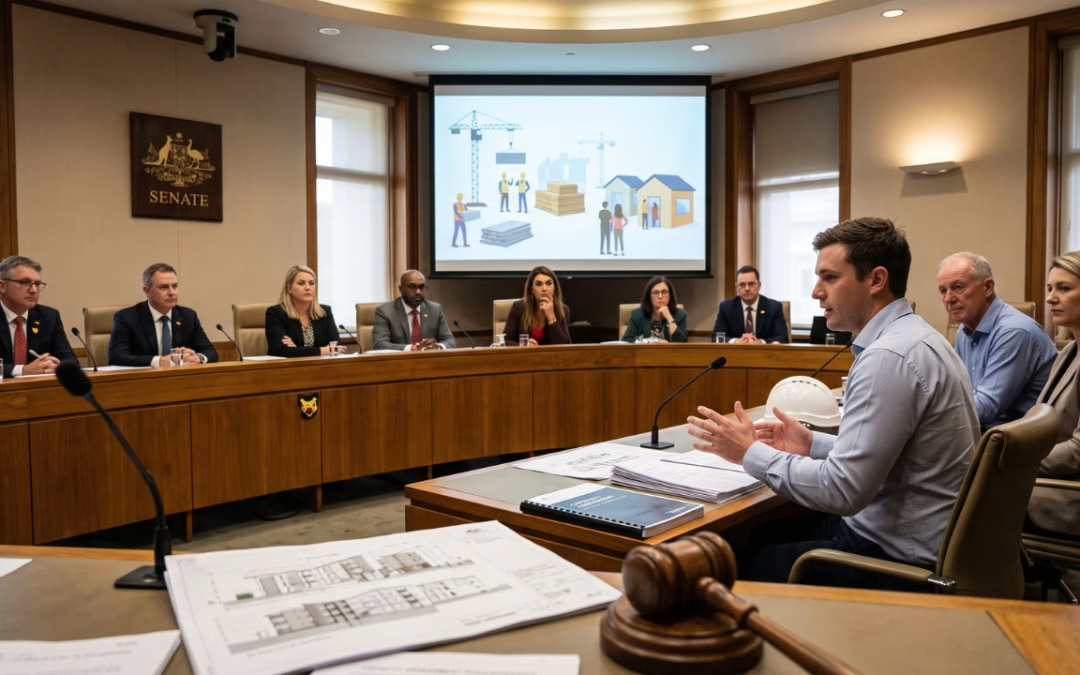
The Schofields project sits alongside the NSW Government’s Building (Approvals and Practitioners) Bill 2026, which includes reforms to formally recognise prefabricated buildings in law, integrate MMC into the approvals system, and strengthen consumer protections for buyers of factory-built homes.
For builders, that combination of on-ground delivery and legislative backing is meaningful. The regulatory uncertainty that has historically made MMC harder to finance and certify is being replaced with a defined framework. The Schofields terraces are the first real-world output being delivered alongside that framework.
The government’s stated intent is to use projects like this to boost confidence in MMC and encourage wider adoption across builders, certifiers, and lenders. A project that delivers on schedule and to quality this year becomes evidence the framework is worth engaging with.
What the Productivity Commission Numbers Mean in Practice
The NSW Government has cited Commonwealth Productivity Commission estimates indicating MMC has the potential to reduce overall construction costs by up to 20 per cent and cut build times by up to 50 per cent compared to traditional construction methods.
Builders should treat those figures as indicative of potential, not guaranteed outcomes. The conditions that allow factory-based delivery to capture those gains include sufficient volume, design standardisation, and supply chains configured for factory-to-site logistics. The Schofields project is a nine-home trial. Those conditions are still being tested and built out at scale.
What the Productivity Commission figures do establish is that the efficiency case for MMC has been made at a national policy level. Governments are not backing this approach speculatively. They are backing it because the productivity argument is credible, and Australia’s housing delivery problem is serious enough to justify testing new methods at scale.
Why the Trial Framing Matters for the Broader Market
Landcom has been explicit that this is a structured trial, with outcomes informing future projects. That approach is worth taking seriously.
Government-backed developers have historically been among the first to absorb risk on emerging construction methods. The private residential market typically waits for that risk to be de-risked before committing at scale. The sequence being played out at Schofields, government-backed trial, legislative recognition, documented outcomes, broader adoption, is the same pattern that has underpinned other construction method shifts in Australia over time.
For builders not currently working in MMC, this is not a signal to pivot immediately. It is a signal to understand the direction of travel. The approvals pathway is being built. The legislative recognition is coming. The government is putting real projects on the ground to demonstrate that delivery is possible.
The builders who understand that framework now, including how the approvals pathway works, what certification under the new Bill will look like, and how factory-built components interact with site-based trades, will be better placed when adoption moves beyond government-backed trials.
For builders not currently working in MMC, this is not a signal to pivot immediately. It is a signal to understand the direction of travel.
What It Means for Trades and Suppliers
Factory-built homes still require site preparation, footings, services connections, and finishing trades. As more modular projects move through NSW, the demand for trades who understand how to work alongside factory-delivered components will grow.
For suppliers, the shift in procurement pattern is worth tracking. Materials that would traditionally be delivered to site need to reach factories reliably and to tighter tolerances. Supply chains configured for conventional builds may need to adapt to serve factory-based manufacturers effectively.
The Schofields project is nine homes. But Landcom has made clear it intends to scale its use of MMC across future projects. That pipeline is real, and the trades and suppliers who position themselves to service it early will have an advantage when it grows.
THE TGB TAKE
The Schofields project is a nine-home trial. It is not a transformation of the residential sector. But it is the most concrete evidence yet that NSW is serious about moving MMC from policy language into delivered homes.
The combination of a live on-ground project, supporting legislation, and a government developer tracking outcomes carefully is a more credible foundation than most MMC announcements in recent years. Builders should watch what Landcom reports out of this project, because that data will shape how quickly the private market follows.
In the meantime, understanding the legislative framework and the approvals pathway is not speculative planning. It is preparation for a direction the NSW Government has committed to clearly.
More: Robots on the Tools, Homes in the Factory: The Construction Revolution the World Is Already Running
General Information Only: This article is intended as general industry commentary. It does not constitute legal, financial, or regulatory advice. Builders and construction professionals should seek independent advice regarding how legislative changes and new construction methods apply to their specific circumstances.


0 Comments