


The Western Australian Government has unveiled a major new initiative to support the state’s home building sector, launching the WA Builder Support Program, a partnership between government and industry designed to strengthen the state’s registered builder network and boost housing delivery.
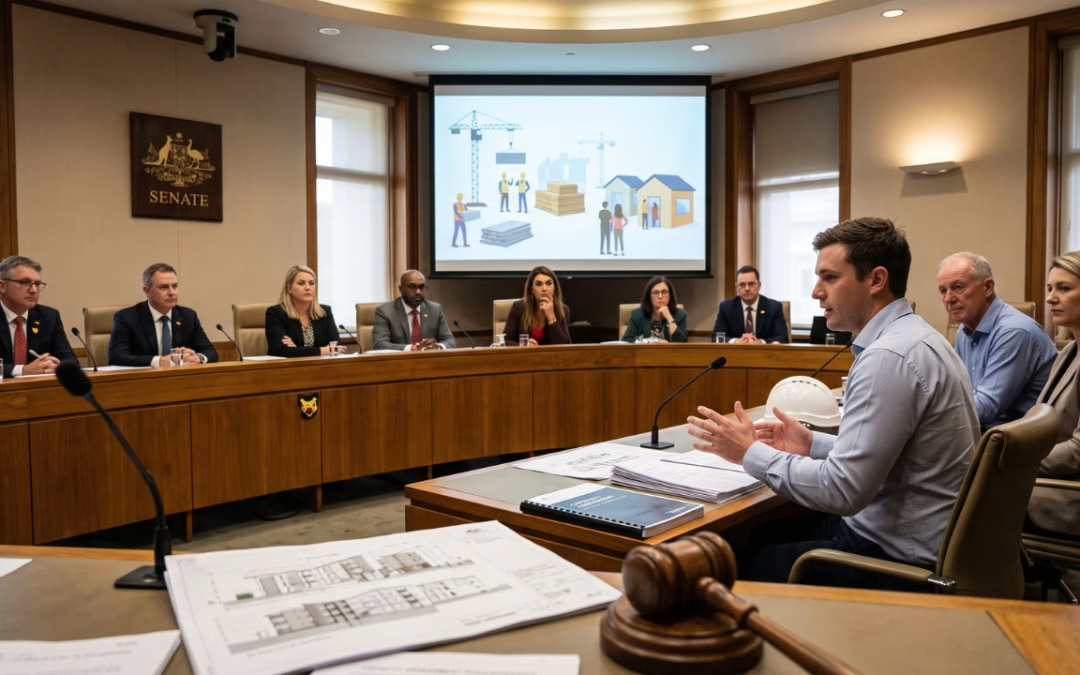
Announced by Commerce Minister Dr Tony Buti, the program will provide $600,000 in funding over two years to the Housing Industry Association (HIA) and Master Builders Association (MBA) of Western Australia, equipping both organisations to help skilled tradespeople transition into registered builders and to upskill existing builders in business and compliance.
This forms part of the Cook Labor Government’s broader plan to ensure “every Western Australian has a home” a priority that blends housing growth with workforce sustainability and long-term industry resilience.

A Hands-On Approach to Strengthening Builder Capability
Under the program, the HIA and MBA will receive $300,000 each to develop tailored initiatives, workshops, and resources to help individuals navigate the often complex registration process required by the Building Services Board.
For tradespeople, that means targeted guidance on how to move from skilled practitioner to fully registered builder including support around licensing requirements, financial management, and technical standards.
For existing builders, it means access to programs that strengthen the business management and compliance side of operations, areas that are becoming increasingly vital as the industry adjusts to tighter margins, higher material costs, and evolving regulatory frameworks.
“We want industry participants to step up and become registered builders to take on these housing projects. We also want existing builders to have strong, stable businesses,” said Dr Buti. “The WA Builder Support Program offers an exciting opportunity to reach these target groups and it is one of many examples of our government’s nation-leading housing plan in action.”
Addressing the Skills Gap
Across Australia, the building industry has faced mounting pressure to meet housing demand amid persistent trade shortages and rising construction costs. Western Australia’s program directly addresses one of the root causes, a shortage of registered builders by creating clearer pathways and reducing the administrative friction often associated with becoming licensed.
Michael McGowan, HIA WA Executive Director, said the program will make a tangible difference.
“With strong housing demand and a resilient economic outlook, Western Australia needs greater builder capacity to meet its share of the National Housing Accord,” he said. “Becoming a registered builder is a significant step — and often a challenging one. This program is designed to guide and support industry professionals through that transition.”
The HIA’s initiative will focus on practical, hands-on learning, combining technical training with business development tools that help builders run sustainable, compliant operations.
Boosting Confidence for Existing Builders
For many builders, business pressures from cashflow management to regulatory compliance have made it harder to maintain stability, even as demand remains high. The MBA WA’s component of the program aims to bolster resilience by providing mentoring and structured guidance to existing registered builders.
Matt Moran, MBA WA Chief Executive, said this support comes at a critical time.
“This initiative will help grow our building and construction workforce to deliver more homes,” he said. “It’s a game changer at a time when we need to build the number of qualified and skilled people in our industry to keep up with a growing population and increasing demand.”
Moran said the MBA’s focus will be on financial and regulatory education, helping builders manage compliance with WA’s building standards, while also improving profitability and project management capability.
A Strategic Collaboration Between Government and Industry
Unlike traditional training programs, the Builder Support Program is designed as a shared initiative between government and industry, acknowledging that the path to housing supply resilience must be built on collaboration.
By partnering with the HIA and MBA, two of the state’s most respected industry bodies, the Government is signalling its intent to strengthen the private sector’s ability to deliver homes efficiently and responsibly.
The partnership also aligns with WA’s broader housing and skills strategy, which aims to streamline planning approvals, accelerate land release, and ensure the state’s construction workforce keeps pace with population growth.
Building Trust and Stability in the Market
For the broader industry, the announcement is a welcome shift toward long-term stability. Builder collapses have dominated national headlines in recent years, fuelling mistrust among consumers and lenders. Programs like this focused on professional development and compliance help to rebuild confidence in the sector by reinforcing that registered builders have the business and technical capabilities needed to deliver safe, high-quality housing.
It’s also an opportunity for tradespeople, from carpenters and bricklayers to site supervisors to progress their careers and take on new responsibility at a time when Western Australia is calling for more builders to step forward.
What It Means for Builders
For builders already operating in WA, the program represents both reassurance and opportunity.
- Reassurance, because it confirms the state government is aware of the industry’s pressures and is acting to strengthen it from within.
- Opportunity, because those ready to upskill or formalise their registration can now access tailored support from trusted associations, reducing the complexity of the process.
The initiative also opens the door for more diverse entrants to the building profession including women, apprentices, and subcontractors looking to formalise their skills and step into leadership roles.
The Good Builder View
At The Good Builder, we’ve long highlighted the importance of raising the bar in the construction industry through better education, business management, and workforce development. This initiative aligns strongly with that vision, a practical on-the-ground response to real industry challenges.
By backing the people who build our homes with training and support, Western Australia is not just boosting housing numbers, it’s building a stronger, more sustainable industry from the ground up.

Author: TGB Editorial

0 Comments