


Australia’s ageing population is reshaping the housing market, yet one element still lags behind in many masterplanned communities, social design. While builders and developers have made major advances in sustainability, accessibility and home efficiency, the industry often underestimates the single biggest factor influencing wellbeing for older Australians: human connection.
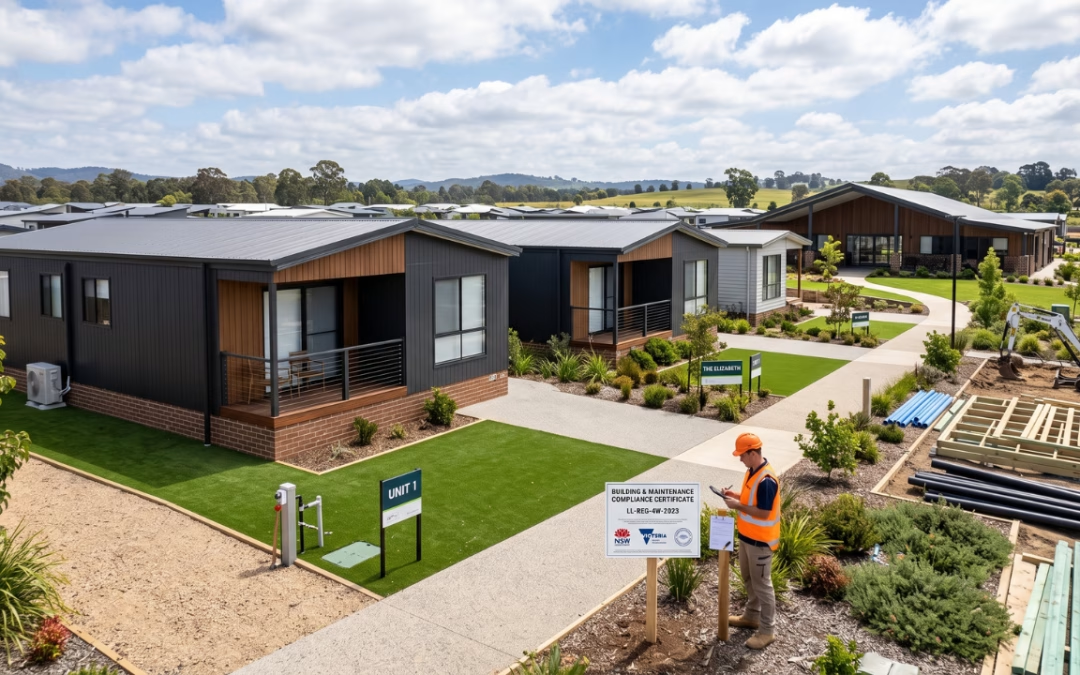
A new over-50s land lease community on the Fraser Coast is demonstrating why community-building touchpoints should be treated as essential infrastructure, not optional extras. Vantage Hervey Bay by AVID Property Group has grown rapidly since welcoming its first residents in April 2025, and its early success highlights a shift the industry can no longer ignore.
Social Isolation Is a Building Problem Not Just a Social One
National Seniors Australia has repeatedly outlined the health impacts of social isolation on older Australians, pointing to increased risks of stress, anxiety, depression and chronic disease. Too often, the solution is treated as a support-service issue.
But for the over-50s housing market, isolation is deeply shaped by design.
If a development does not deliberately create opportunities for interaction, shared paths, flexible meeting spaces, informal gathering areas, and programs that help neighbours connect, the result is predictable: people move in, close their front doors and struggle to build a sense of belonging.
This is where Vantage Hervey Bay provides valuable lessons.
Designing Communities, Not Just Houses
According to AVID’s General Manager Queensland and Land Lease Communities, Anthony Demiris, the project was intentionally planned around wellbeing and social cohesion from day one.
“Every element from the layout to the facilities to the social initiatives was designed to bring people together,” he said. “This stage of life is one of immense change, so we have invested heavily in creating spaces and opportunities that support a balanced and happy lifestyle.”
And it shows.
Within months, residents had already created a weekly happy hour, a monthly sausage sizzle and a bike-riding group that explores the Hervey Bay region. These initiatives weren’t corporate-led; they were enabled by thoughtful design that made socialising easy, natural and low-pressure.
Infrastructure That Connects People
A $16.5 million Clubhouse is now under construction and set to become the community’s social anchor. But Vantage didn’t wait for its flagship building to start building connection. Instead, it treated community as something that begins on day one, long before the official facilities open.
This is one of the biggest lessons for developers:
Community isn’t built when the clubhouse opens, it’s built the moment the first residents arrive.
Simple touchpoints, flexible outdoor spaces and intentional pathways can do just as much to spark interaction as large-scale amenities.
Key Take Aways
Over-50s communities are no longer just about low-maintenance living and lifestyle facilities. The incoming wave of downsizers and retirees are looking for connection, belonging and a reason to participate and they can tell when a development has genuinely planned for that.
Prioritise social touchpoints in the masterplan
Pathways that encourage chance encounters, shaded seating, dog-friendly areas, community gardens and central walking loops all contribute to micro-moments of connection.
Make it easy for residents to self-organise
Communities thrive when residents feel ownership. Flexible meeting areas, multi-purpose outdoor spaces and early-stage activation programs help traditions form naturally.
Treat wellbeing as a core deliverable
Neighbourhoods that support mental and physical health, through design, programming and thoughtful amenity produce happier residents, stronger retention and healthier community culture.
A Model for Future Neighbourhoods
Residents Gary and Marita Pratt describe their move to Vantage Hervey Bay as the ideal start to their next chapter. “At Vantage we’ve found a sense of community that we wouldn’t have if we had just bought a unit somewhere,” Mr Pratt said. “You can be as social as you like, or you can stick to yourself, the choice is yours.”
That balance, the ability to connect when you want, retreat when you need is what defines modern over-50s living.
As governments, builders and developers look to deliver more housing for Australia’s ageing population, social design must move from being a “nice idea” to a core piece of critical infrastructure. The evidence is clear. When communities prioritise connection, wellbeing improves, residents thrive and neighbourhoods become places people want to call home.




0 Comments