


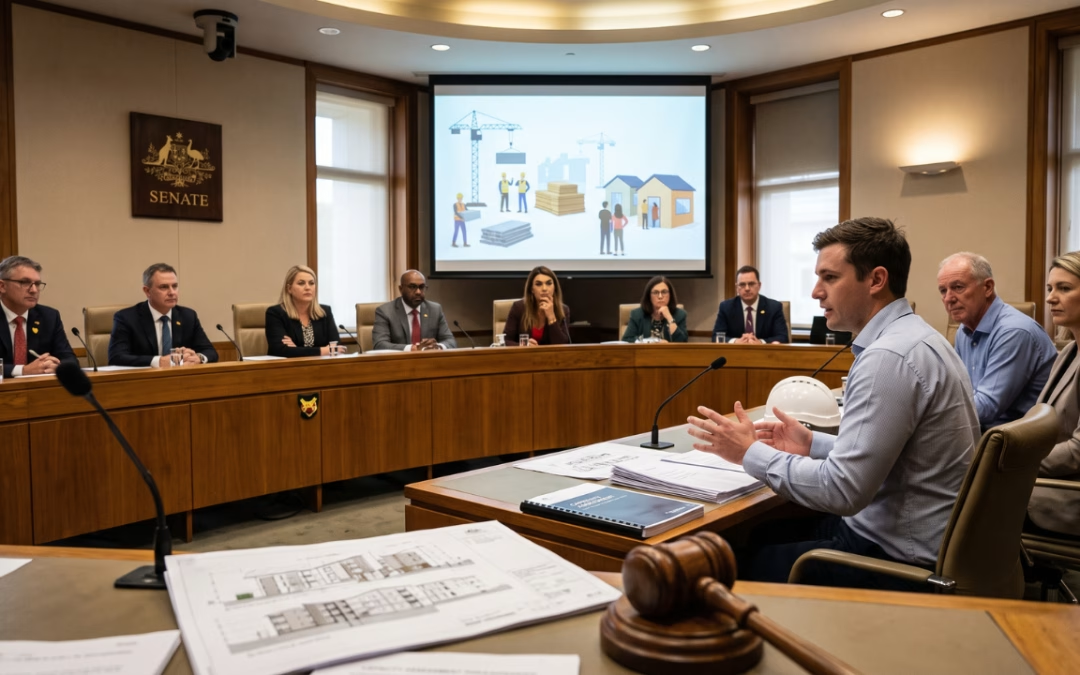
The Albanese government has confirmed it will pause further changes to the National Construction Code (NCC) until 2029, citing “sheer complexity” and the need to give builders space to deliver homes without navigating constant red tape.
The announcement follows the government’s Economic Reform Roundtable, where industry leaders raised concerns about regulatory overload in the face of Australia’s deepening housing crisis.
After the scheduled 2025 updates are finalised, no new changes will be made to the NCC until mid 2029, except for essential safety and quality matters.
Housing Minister Clare O’Neil acknowledged the scale of the problem in blunt terms:
“We have got a national construction code here which has become unworkable for our builders. There is no simple tool to use it. It is much too long, much too complicated.”
The NCC currently runs to more than 2,000 pages and is updated every three years. Its 2022 amendments, particularly around energy efficiency and accessibility, were estimated to have added between $30,000 and $50,000 to the cost of a new home.
Politics in the Mix
The pause has stirred political controversy. Shadow Treasurer Ted O’Brien accused Labor of adopting Coalition policy, noting that his party had gone to the last election calling for a decade long freeze on the NCC.
“Labor made this decision in advance. They had to call an economic reform round table to provide cover for the fact they adopted Coalition policy,” O’Brien told Sky News Sunday Agenda.
Regardless of the political point scoring, the policy represents a significant shift in the regulatory landscape for builders.
What Stays, What Goes
The freeze does not roll back existing measures. Energy efficiency standards, accessibility requirements, and EV charger provisions introduced in 2022 will remain.
Ms O’Neil stressed that while affordability and complexity are front of mind, sustainability cannot be ignored:
“We want to have energy efficient houses. Climate change is a reality that has got to be dealt with. But we want to do this in a way that is workable for our builders.”
During the pause, the government has flagged efforts to simplify the code, including exploring the use of artificial intelligence to help builders and certifiers navigate it more effectively.
Industry Reaction: Relief, But With Caution
For many builders, the freeze will provide short term relief. The prospect of no major regulatory changes for four years offers a degree of certainty in an environment already strained by rising costs, tight labour markets, and volatile supply chains.
But there is also concern the pause could leave deeper issues unresolved. Builders are still grappling with the cost impact of existing requirements, and many question whether freezing the code simply delays rather than addresses the fundamental problem of complexity.
Denita Wawn, CEO of Master Builders Australia, welcomed the move but urged the government not to waste the opportunity.
“Builders have been telling us for years that the NCC has become unwieldy. This pause should be used to simplify and streamline the code so it is fit for purpose. If we do not take this chance, then we will be in exactly the same position in 2029.”
HIA Managing Director Jocelyn Martin echoed that sentiment, pointing to affordability pressures.
“The 2022 changes added significant costs to housing at a time when affordability was already stretched. While we support sustainability, the code must not come at the expense of Australians being able to own a home. We need to find balance.”
A Brisbane based medium volume builder told The Good Builder:
“We are already struggling to keep up with what has been introduced. Freezing it does not change the fact that it is still an unworkable document. Unless they actually simplify it, this just kicks the can.”
Housing Supply Pressures
The timing of the decision is critical. Australia faces a chronic undersupply of housing, with population growth outpacing completions and rental vacancy rates near record lows.
As part of the same policy package, the government announced plans to fast track approval for 26,000 new homes currently stuck in environmental assessment under the Environment Protection and Biodiversity Conservation (EPBC) Act.
Treasurer Jim Chalmers framed the freeze as part of a broader push to cut red tape:
“We have asked Clare O’Neil to see where we can reduce complexity and red tape in the National Construction Code. To do that in a balanced way which takes into consideration the concerns that were raised.”
The Cost Question
The 2022 code changes remain a sore point. Meeting the upgraded energy and accessibility standards requires higher spec glazing, more insulation, and design changes that have pushed base house costs upwards.
For first home buyers and builders alike, that translates into tougher affordability pressures at a time when mortgage repayments are already stretching households to their limits.
The Urban Development Institute of Australia (UDIA) also weighed in, warning that red tape and regulatory costs are a handbrake on housing supply.
“Freezing the code is a step in the right direction, but it is only one piece of the puzzle. We also need planning reform, faster approvals, and a reduction in the cumulative regulatory burden if we are to meet Australia’s housing targets,” said UDIA National President Max Shifman.
Looking Ahead
The NCC freeze raises key questions for the industry:
- Will this pause genuinely reduce complexity, or simply delay the next wave of changes
- How will builders navigate the existing 2,000 page code without clearer tools and guidance
- Can affordability and sustainability be balanced in a way that works for both consumers and industry
The government’s promise to explore digital tools and AI solutions to make the NCC more navigable could be a game changer if delivered. But builders will remain cautious until they see practical outcomes.
The TGB Take
At The Good Builder, we hear from both sides daily. On one hand, sustainability and energy efficiency are non negotiables for the future of housing. On the other, the reality for builders is that the NCC has become an administrative and financial burden that too often slows down delivery and prices buyers out.
The four year pause may offer breathing space, but unless it is used to genuinely simplify the code and reduce compliance headaches, it risks becoming another political talking point that does little to help builders on site.



0 Comments