


In a huge boost for the prospects of the home building industry in South Australia, the State Government plans to rezone approximately 7,324 hectares of land currently designated for agricultural use around Greater Adelaide into developable residential land, paving the way for more than 61,000 new homes over the next three decades.
Premier Peter Malinauskas announced the initiative, which aims to address the state’s growing housing needs by expanding residential development into five key regions: Roseworthy, Two Wells, Murray Bridge, Victor Harbor, and Goolwa.
Along with the rezoning, significant infrastructure investment is planned. The release details “extended corridors for future rail lines north and south of Adelaide,” alongside new schools, health facilities, and transport upgrades. These enhancements aim to create sustainable, well-connected communities.
The updated Greater Adelaide Regional Plan (GARP) outlines a strategic vision to accommodate a population increase of approximately 670,000 people by 2050.
Premier Malinauskas emphasised the urgency of updating the plan, stating, “The time to act is now, we need to plan ahead to make sure young South Australians have the same opportunities as their parents to own a home.”
He highlighted the economic and social benefits, noting that “by providing more land for housing, we’re ensuring there’s more opportunities for South Australians to get construction jobs and apprenticeships.” The government projects that this development could support around 122,000 local jobs over the next 30 years, offering significant opportunities for the state’s construction industry.
Brad Duggan, CEO of Metricon, praised the initiative on Linkedin, saying, “South Australia’s state government sees the value of investing in infrastructure that will deliver homes where people want to live. Housing that provides space for people to grow their families and a backyard. This is a plan for the future.”
The 7,324 hectares of land to be rezoned accounts for less than 1% of the region’s protected farmland. While this has raised concerns among some farming groups, the government has assured that key agricultural zones, such as the Barossa and McLaren Vale Character Preservation Districts, will remain protected. “This is about striking the right balance between supporting our agriculture sector while meeting the needs of our growing population,” Malinauskas said in the release.
The announcement has been framed as a proactive response to South Australia’s housing challenges. “If we don’t act now, house prices will rise even further, and young families will be forced to move interstate to buy a home,” Malinauskas warned. He added a personal note, stating, “I don’t want my kids growing up in a South Australia where owning a home is out of reach for their generation – and I know many other parents feel the same.”
“This isn’t about paving over our productive farmland – it’s about using a small fraction of land strategically to secure our state’s future.”
Legislation to enable these changes is set to be introduced to the South Australian Parliament this week. If passed, detailed planning for land use and infrastructure will begin, setting the stage for construction to ramp up in the coming years.
For the building industry, this announcement signals a wave of opportunity. With the potential for thousands of new homes and associated infrastructure projects, South Australia’s construction sector could see sustained growth and a robust pipeline for tradies, developers, and suppliers alike. As the state looks to balance housing affordability with economic development, the success of this bold plan will be closely watched by homeowners, builders, and policymakers across the nation.
TGB Takeaways:
- The SA government is investing in land releases where people want to live — not just where zoning allows.
- Builders and developers should start positioning for long-term opportunities across the planned suburbs.
- Fast-tracked planning and investment create confidence and unlock job pipelines.
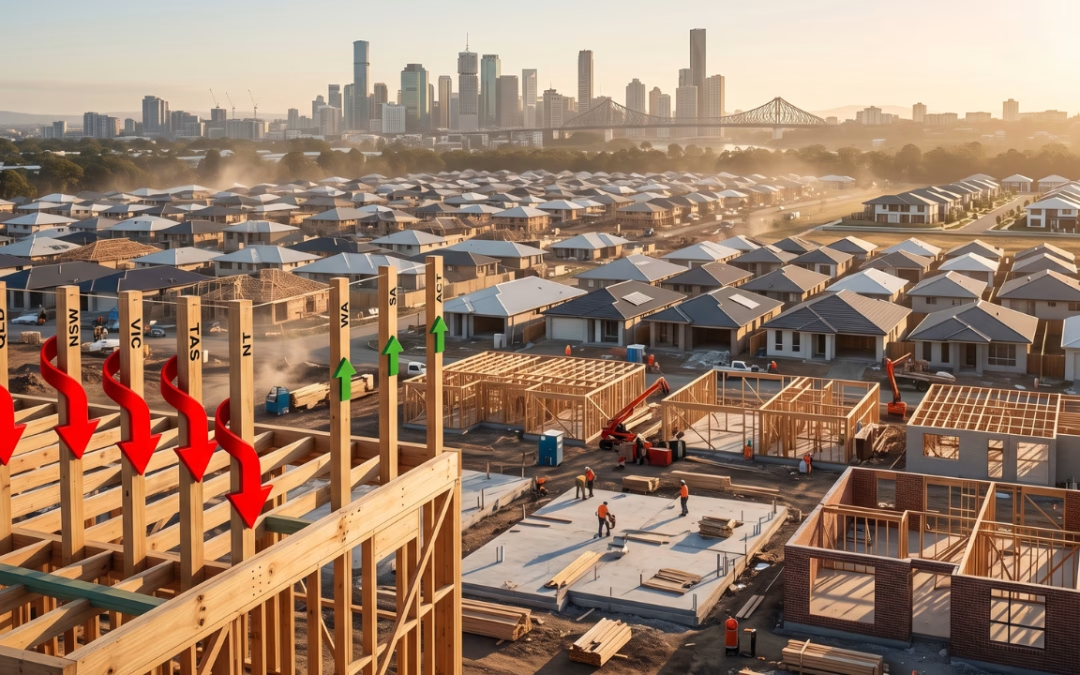
- We are seeing different state approaches shape demand, pricing, and availability. Stay alert to how your state is positioning growth.

Author: Peter Love
Pete was the General Manager of one of Australia’s largest home builders for six years, before starting his own business as a buyers’ advocate, building over 200 homes in five years across South East Queensland and working with over 20 builders to deliver them. Across this time he has seen most facets of the industry, the good, the bad, and the beautiful.


0 Comments