


April building approvals data from the ABS confirms the detached housing recovery is no longer a one-month event. Three consecutive months above 10,000 private sector house approvals points to sustained demand. Queensland hits its highest house approval result since August 2021.
Australian building approvals fell 3.4 per cent in April 2026 to 16,710 on a seasonally adjusted basis, according to data released today by the Australian Bureau of Statistics.
The headline number will attract the usual commentary about falling approvals. It should not distract from the more significant story sitting underneath it.

Private sector house approvals have now exceeded 10,000 for three consecutive months. February, March, and April. The last time that happened was October, November, and December 2021, when the HomeBuilder sugar rush was still flushing through the system.
This time there is no stimulus program driving it. The demand is organic.
Three consecutive months above 10,000 private sector house approvals. No grant. No government scheme. Just underlying demand for detached housing that has not gone away.
What the Numbers Show
Private sector house approvals came in at 10,088 in April, a fall of 1.0 per cent from March. That is a minor softening after two strong months, not a reversal.
More telling is the year-on-year picture. Total dwellings approved in April are 10.2 per cent higher than they were a year ago. Private sector house approvals are 7.0 per cent above April 2025. Private dwellings excluding houses are 20.5 per cent higher year-on-year in seasonally adjusted terms.
The direction of travel across all segments is up. Month-to-month volatility is noise. The twelve-month trend is the signal.
Queensland Reaches a Four-Year High
For builders operating in Queensland, the April data carries specific significance.
Queensland private sector house approvals rose 0.9 per cent in April to 2,303, reaching the highest level since August 2021. That is a four-year high for one of the country’s most active residential construction markets.
The southeast Queensland corridor, from the Sunshine Coast through Brisbane to the Gold Coast, has been running at sustained pace for two years. This result confirms the pipeline there is not thinning out.
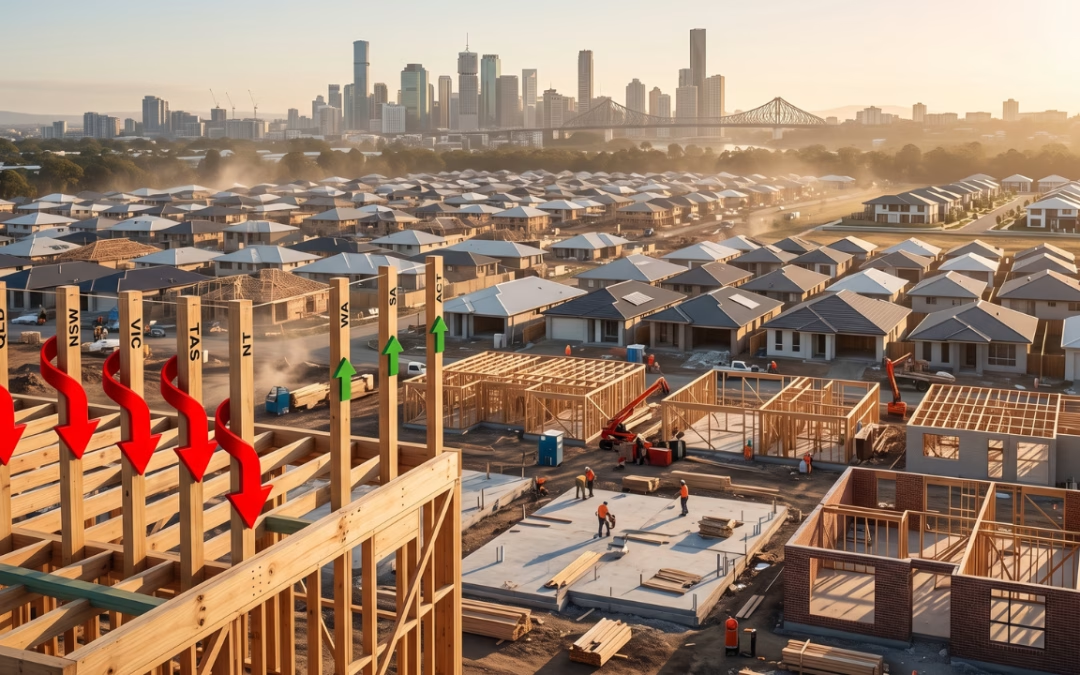
Victoria also recorded growth, with private house approvals rising 2.2 per cent to 2,906. South Australia was up 11.4 per cent to 896.
New South Wales was the drag on the national house figure, falling 13.8 per cent to 2,025. The ABS noted this followed March’s result which was the highest for NSW since August 2022, so April is partly a correction from an unusually strong prior month rather than a structural shift.
Queensland private sector house approvals hit their highest point since August 2021. For builders in the southeast Queensland market, the pipeline remains as strong as it has been in years.
The Non-Residential Bounce
One number in the April data that deserves attention is the non-residential building value, which jumped 29.4 per cent to $7.75 billion after falling 26.3 per cent in March.
Commercial and industrial building approvals are volatile by nature. A single large project can swing the monthly figure significantly. But the direction here matters for builders and trades who work across both residential and commercial sectors.
Non-residential work provides a useful counterweight during periods when residential volumes soften. Builders with the capability and relationships to move between sectors have more options when conditions shift.
Total residential building value came in at $10.89 billion, essentially flat on March. New residential building value was unchanged. Alterations and additions fell 2.5 per cent but remain above the twelve-month average.
The Target Gap in Context
Australia needs around 20,000 dwelling approvals per month to stay on track for the national housing target of 1.2 million new homes by 2029. April’s result of 16,710 falls short of that mark.
The three-month streak above 10,000 for house approvals is real progress. The apartment and multi-unit pipeline is recovering but remains volatile and below where it needs to be. Feasibility constraints, construction costs, and financing conditions continue to limit how quickly the higher-density pipeline can fill the gap.
The year-on-year lift of 10.2 per cent is meaningful. Approvals were sitting in the low 13,000s through much of 2023. The recovery since then has been genuine. Whether it can push through 20,000 on a sustained basis is the question the industry should be tracking each month.
What This Means for Builders
Three consecutive months above 10,000 house approvals is a workload signal. It means site starts are accumulating. It means the forward pipeline for detached housing work is as solid as it has been in several years.
For builders who have spent the past two years tightening systems, locking in trade relationships, and managing capacity carefully, the conditions ahead are favourable. The volume is there. The challenge now is executing without the overtrading mistakes that defined the 2021 to 2023 period.
Trade availability remains the binding constraint in most active markets. Queensland in particular is running hard. Builders who can secure reliable subcontractor coverage across the next twelve months are positioned well.
For suppliers, the sustained house approval numbers confirm forward demand for materials and components tied to the detached housing cycle. Planning inventory and logistics around a pipeline that is trending upward rather than down is a fundamentally different operational position to where the industry was eighteen months ago.
The volume is there. The question for builders now is the same one it has always been: can you execute at pace without overextending?
The Good Builder Take
The April ABS data adds another data point to what is becoming a clear picture. Detached housing demand in Australia is not going away. Three months above 10,000 private sector house approvals without a government stimulus program behind it tells you something real about underlying need. The total approval number falling to 16,710 will generate the usual negative coverage. That number is still 10.2 per cent above where it was a year ago, and the house segment that drives most residential builders’ workloads is performing at a multi-year high. Queensland hitting its highest house approvals since August 2021 is the headline for this market. Builders there should be thinking about capacity, not demand.
For the full breakdown of the March 2026 data including state-by-state analysis and value figures, see: Apartment Approvals Slump Masks Solid House Demand in March Building Data.
General Information Disclaimer: This article is based on ABS data released 2 June 2026. All figures are seasonally adjusted unless otherwise stated. This content is intended for general information purposes only and does not constitute financial, investment, or business advice.

Author: TGB Editorial

0 Comments