


The April 2026 ABS data shows Queensland private sector house approvals rising to a four-year high. But the conditions that greeted builders the last time approvals reached this level were nothing like today.
The number is worth pausing on.
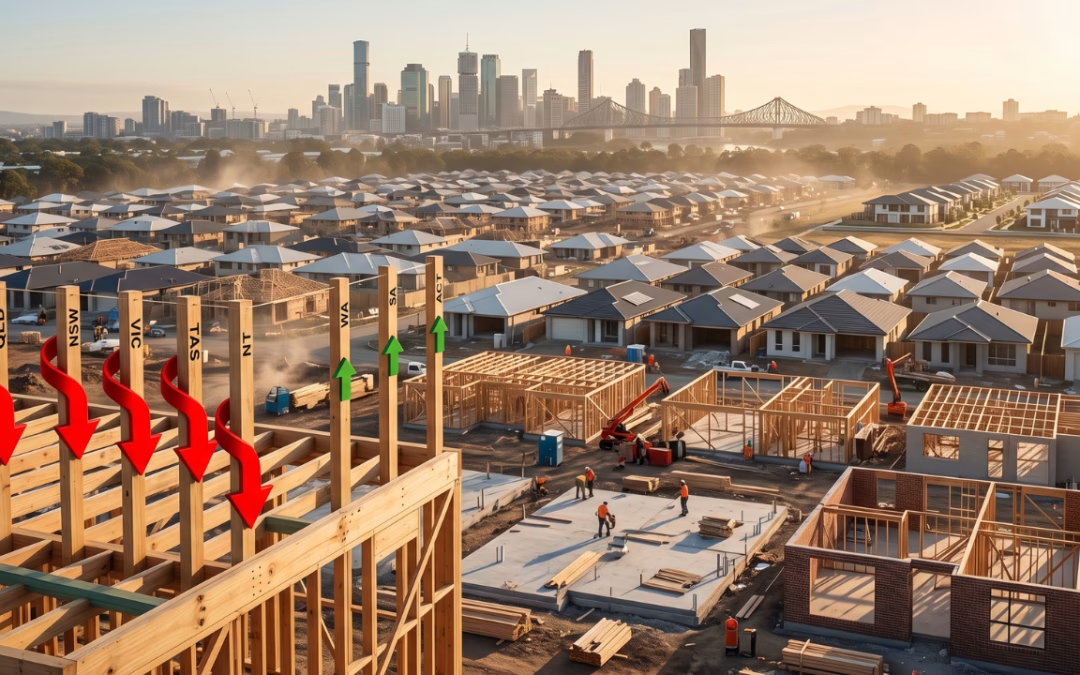
Queensland private sector house approvals rose 0.9 per cent in April 2026, according to seasonally adjusted data released today by the Australian Bureau of Statistics. At 2,303 approvals for the month, the state has reached its highest house approval result since August 2021.

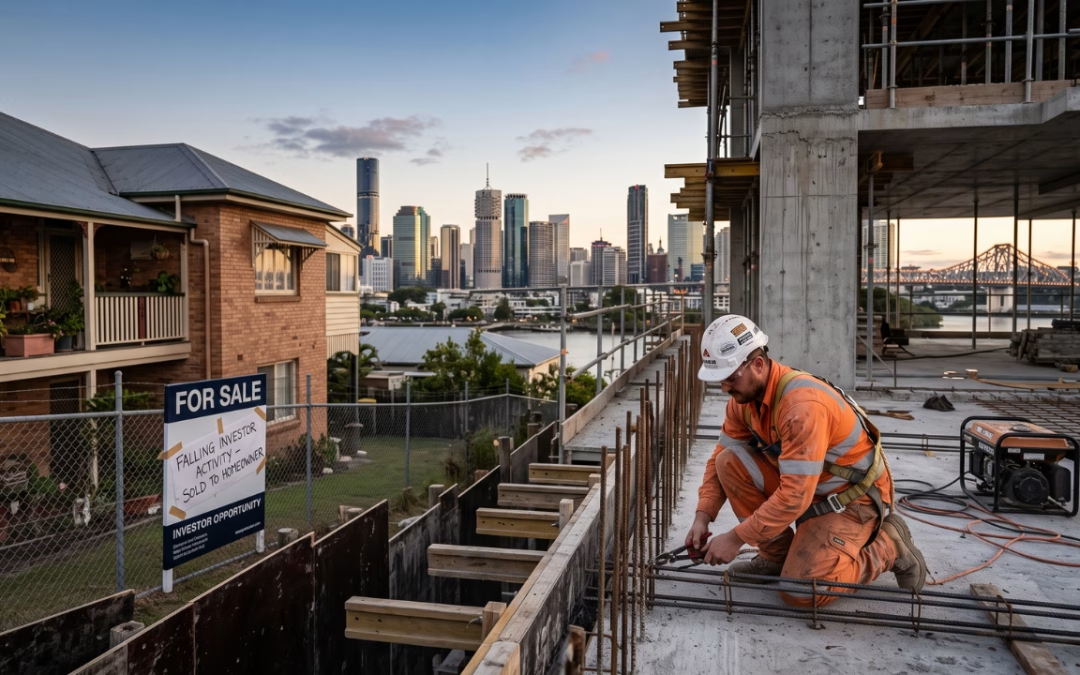
That milestone deserves context. August 2021 was a very specific moment in time. The HomeBuilder grant was still pushing demand through the system. Trades were beginning to buckle under the weight of a pipeline they could not service. Material costs were climbing fast. Builders who had taken on too much work were starting to feel the early pressure of what would, for many, become an existential squeeze.
The number was high. The conditions behind it were not.
Four years on, Queensland is approaching a similar approval level from a very different direction. And understanding that difference matters for builders trying to read what this pipeline actually means for their business.
What Is Driving the Recovery
The approval recovery in Queensland has not arrived suddenly. It has been building steadily across 2025 and into 2026, underpinned by a combination of population pressure, policy activity, and gradually improving finance conditions as interest rates eased from their peak.
Queensland continues to absorb strong interstate migration. South-east Queensland in particular has experienced sustained demand from people relocating from southern states, attracted by lifestyle, relative affordability, and employment opportunities. That demand has kept the underlying case for new housing construction firmer than in some other markets.
The approval pipeline in Queensland is building from genuine demand, not stimulus. That distinction changes how builders should approach the work ahead.
At the same time, the Queensland Government has been active on housing supply policy. The Commonwealth and Queensland Governments recently committed to a joint $399 million grants package plus $1.6 billion in zero-interest concessional loans for enabling housing infrastructure, welcomed by Master Builders Queensland as an important step in unlocking supply constraints.
Planning reforms have also been reshaping how projects reach the approval stage. The Crisafulli Government reset the State Facilitated Development pathway in March 2026, amending eligibility rules and returning more decision-making authority to local councils. For builders, this has changed the calculus around which projects can access expedited approvals and which will follow a longer standard pathway.
The effect on approval numbers has not been immediate, but the direction of policy is consistent with the trend: more projects being worked up, more applications being lodged, more homes entering the pipeline.
The Trade Availability Question
Here is the issue builders in Queensland are watching most closely.
The approval recovery is real. The capacity to deliver on it is the variable.
The National Housing Supply and Affordability Council’s 2026 State of the Housing System report identified Queensland and Western Australia as experiencing the sharpest trade availability pressures, driven in part by competition from infrastructure and mining projects pulling skilled workers out of residential construction.
That pressure has not resolved. Tradesperson availability remains a genuine constraint on how quickly approved projects can convert to starts, and how quickly starts can convert to completions. A four-year high in approvals does not automatically translate to a four-year high in completions, particularly when the labour pool is being pulled in multiple directions.
Approvals are the front end of a long chain. Builders who have been through the last cycle know that the hardest part comes after the paperwork.
This is not a reason to approach the pipeline pessimistically. It is a reason to plan carefully.
Builders who scaled aggressively during the HomeBuilder period and found themselves short of trades, materials, and margin have not forgotten what overcommitting looks like. Many have rebuilt their businesses with a more deliberate approach to volume. The question now is whether the lessons of 2021 to 2023 hold as the market climbs again.
The Infrastructure Gap
One constraint that consistently limits Queensland’s ability to convert approved homes into occupied ones is infrastructure. Water, sewerage, roads, and utilities must reach greenfield sites before homes can be built and occupied.
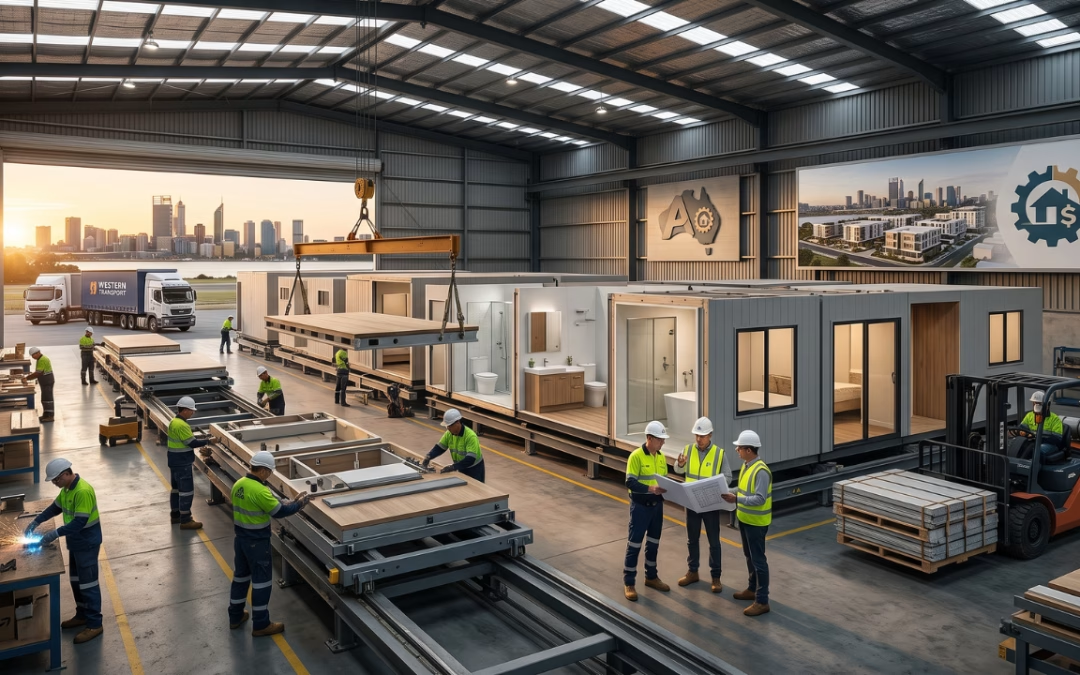
The Crisafulli Government has been activating several Priority Development Areas across the state, including the Mount Peter corridor in Far North Queensland, backed by a $2.4 billion enabling infrastructure agreement. The QBuild manufacturing facility at Portsmith is also expanding annual production capacity by 40 per cent from July 2026, targeted at regional and remote housing delivery.
These are meaningful signals. They suggest the state is thinking not just about approval numbers but about the full delivery chain. For builders, particularly those operating in regional Queensland, infrastructure investment is what actually opens up work.
The challenge is that infrastructure timelines and approval timelines rarely run in perfect parallel. Approvals can move faster than roads and pipes. Managing client expectations around when a site is genuinely build-ready is part of the conversation builders will need to have as the pipeline grows.
Reading the Difference
When private sector house approvals last sat at this level in August 2021, Queensland builders were operating in an environment of artificially elevated demand, restricted supply chains, and rapidly escalating costs. The conditions were unsustainable and they did not sustain.
The environment in mid-2026 is different. Demand is real rather than stimulus-driven. Costs have stabilised at a higher base but are not climbing at the same rate. Interest rates have come off their peak. And the industry has spent two years working through a difficult period that has, for those who made it, produced more disciplined operations.
The approval number reaching a four-year high is a positive signal. It means clients are making decisions. Finance is being approved. Projects are entering the pipeline. For builders with capacity and the right systems in place, the next 12 to 18 months offers genuine opportunity.
But the milestone is worth treating with clear eyes. Four years ago, a similar number preceded one of the most difficult periods in residential construction in living memory. The number is not the whole story. What sits behind it is.
The Good Builder Take
Queensland house approvals at a four-year high is genuinely positive news. The demand is real, the policy environment is more active than it has been in years, and the pipeline is building from a more honest base than 2021.
But builders who have been through the last cycle will approach this carefully. Trade availability is tight. Infrastructure delivery takes time. And overcommitting to volume in a rising market is one of the ways good building businesses get into trouble.
The opportunity is there. The discipline to size it right is what separates the builders who will benefit from those who will not.
More news from QLD: Queensland’s First Three-Storey Factory-Built Social Homes Are Being Installed on the Capricorn Coast
General Information Disclaimer: This article is based on ABS data released 2 June 2026. All figures are seasonally adjusted unless otherwise stated. This content is intended for general information purposes only and does not constitute financial, investment, or business advice.

Author: TGB Editorial




0 Comments