


A nominal land transfer and $8.7 million in infrastructure funding are clearing the path for a new key worker village in regional WA. Here is what the model means for builders working in markets where worker accommodation is becoming a constraint.
There is a land supply story playing out in Geraldton that builders and housing market watchers should pay attention to.
The Western Australian Government has agreed to transfer 8.8 hectares of Crown land to the City of Greater Geraldton for the nominal sum of one dollar. The purpose is to enable the construction of a 140-dwelling key worker village, to be built in stages on a site located just south of the Geraldton CBD.
The transfer is backed by $8.7 million already committed through the State Government’s $120 million Infrastructure Development Fund, which covers the upfront costs of connecting the site to essential utilities including water and power.
140 dwellings. Staged delivery. Infrastructure pre-funded. This is a construction pipeline story for regional WA.
Why Key Worker Housing Is a Construction Issue
Geraldton has been under accommodation pressure for some time. The region is home to a number of large project pipelines, including the ongoing Geraldton Health Campus redevelopment, which has drawn workers and contractors into a rental market that has struggled to keep pace with demand.
When workers cannot find suitable housing near a project, the ripple effect is felt across the entire supply chain. Trades decline jobs. Project timelines stretch. Costs rise as businesses absorb the difficulty of attracting and retaining people in locations where housing is tight.
A dedicated key worker village changes that equation. It stabilises the local workforce base and gives builders and contractors operating in the region a more reliable pool of labour to draw from.
The $1 Land Transfer Model
The nominal consideration for this land is worth understanding beyond the headline figure.
Crown land transferred at $1 is not a rare mechanism, but it is a deliberate policy choice. Rather than recovering market value through a land sale, the government is using the asset to directly enable housing delivery. The trade-off is straightforward: less short-term revenue, more housing supply, faster.
Combined with the Infrastructure Development Fund allocation covering enabling works, the model removes two of the most common blockers to housing delivery in regional areas: land cost and upfront infrastructure investment.
For builders working on or tendering for the Geraldton village, those costs are already resolved before a slab goes down.
The two biggest blockers to regional housing delivery are land cost and infrastructure investment. This model addresses both before a slab goes down.
What the Staged Delivery Means for the Construction Pipeline
The 140-dwelling target will be delivered across several stages. That structure matters.
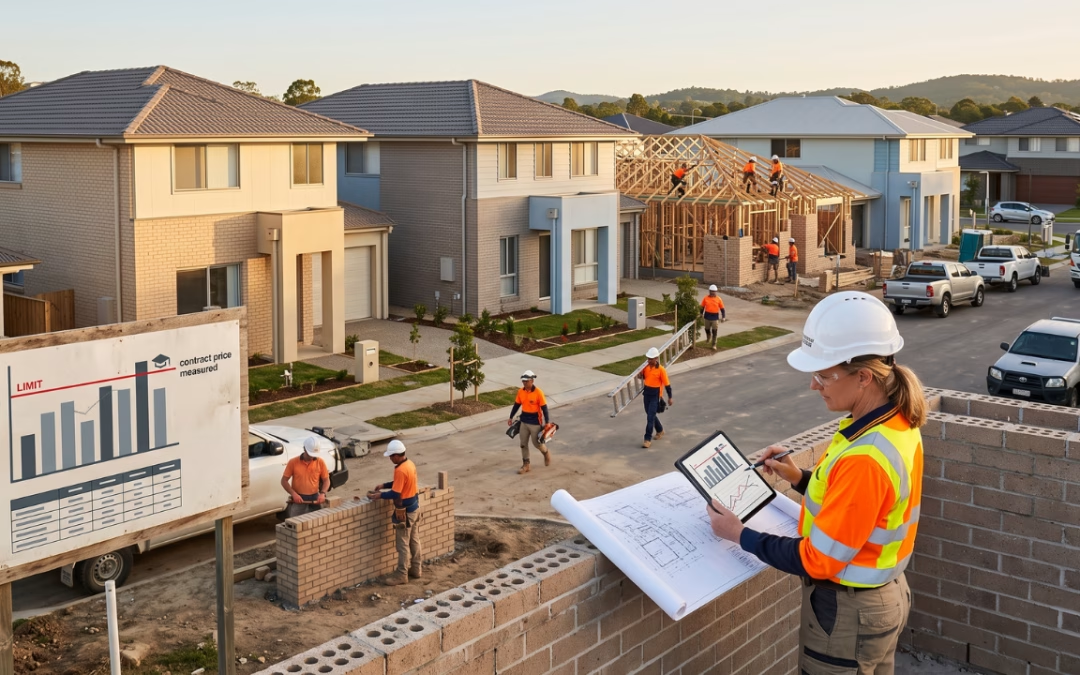
Staged delivery gives builders a more manageable and sustainable workflow than a single large procurement. It also means the construction pipeline stretches over a longer period, providing more sustained opportunity for local and regional builders rather than a single burst of activity that overwhelms local capacity and then disappears.
For trades and subcontractors operating in the Mid West region, a staged residential village of this scale represents a meaningful volume of consistent work over several years.
The Broader Picture: Regional Housing Is a Growth Sector
The Geraldton story sits within a wider pattern across regional Australia.
Government investment in key worker and affordable housing has accelerated across multiple states as the gap between demand and supply in regional centres has widened. From Queensland to Western Australia, councils and state agencies are working through mechanisms including land transfers, infrastructure grants and planning fast-tracks to unlock sites that the private market has been slow to activate.
For builders with the capacity and appetite to work in regional markets, this pipeline is real and growing. It is not speculative. It is funded, it is land-resolved, and in Geraldton’s case, it has an infrastructure allocation already in place.
The key worker segment will not replace the broader residential market, but it represents a more stable and less cyclical workload than speculative land releases. Government-backed projects come with committed funding and less exposure to the interest rate and sentiment volatility that has made parts of the private market unpredictable.
What Builders Should Watch
The Geraldton key worker village will move through a formal procurement and tender process. Builders interested in regional WA work should monitor opportunities through the City of Greater Geraldton and the WA Government’s Tenders WA platform as the project progresses through its stages.
More broadly, this model, Crown land transferred at nominal cost, infrastructure pre-funded through a dedicated government fund, and delivery structured in manageable stages, is likely to be replicated in other regional centres across WA and nationally as governments look for ways to accelerate housing supply outside of the major metropolitan markets.
It is worth understanding how these deals are structured. Builders who can operate confidently within government-backed frameworks, meeting compliance requirements, working within design briefs, and managing staged delivery, will be well-positioned as this segment grows.
More land news: Flood Buyback Land Gets a New Future.
General information only. This article does not constitute legal, financial or commercial advice. Readers should seek independent advice before making any business or investment decisions.




0 Comments