

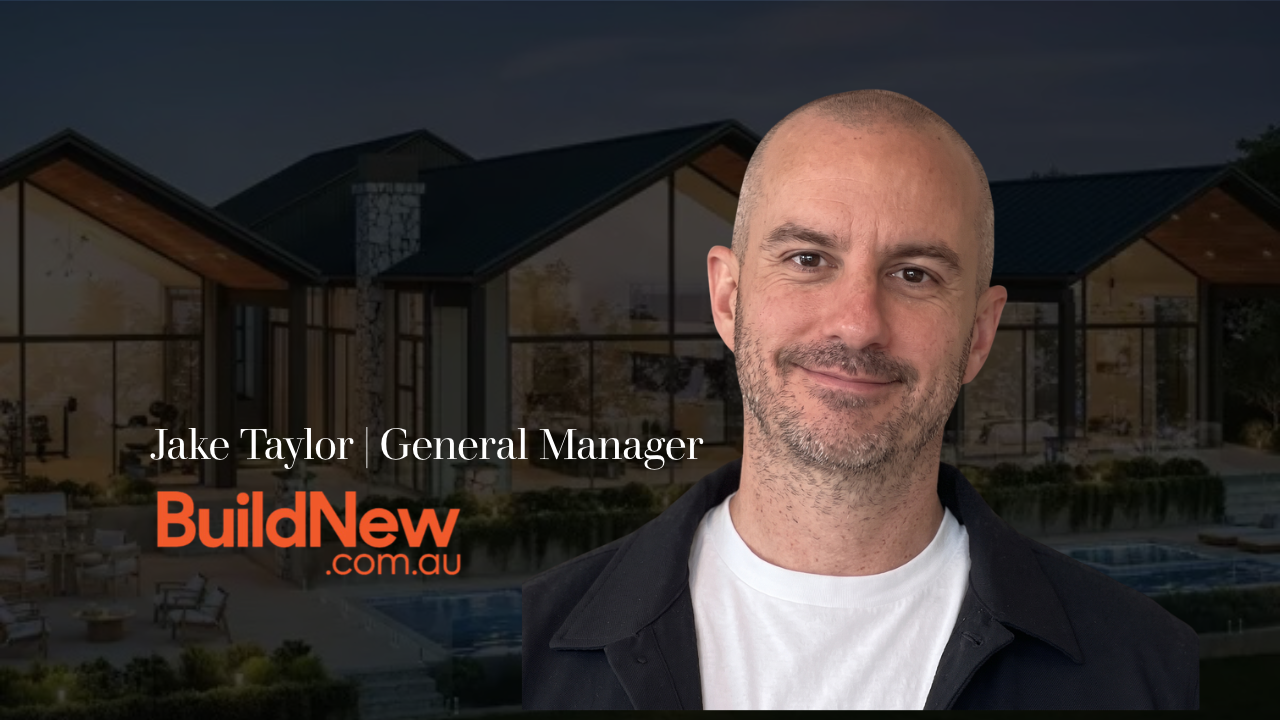
Build New’s Jake Taylor sat down with The Good Builder Podcast to talk lead quality, quiet markets and AI on the phone. His starting point will have plenty of marketing managers rethinking where the budget goes.
Ask most volume builders who their competition is and they will name the builder with the display home next door. Jake Taylor reckons they are looking in the wrong direction.
Jake has spent about a decade with Third Door Ventures, the Melbourne proptech group behind apartments.com.au and the newly rebranded Build New, a platform made specifically for people planning to build a new home. The group has also just acquired villages.com.au, a retirement living directory.
He joined The Good Builder Podcast to talk about what new home buyers actually want, why lead quality beats lead volume, and where AI fits into the sales process.
The real competition for a new build is an established home
“The biggest competition to any new property is established property,” Jake told Az. A buyer weighing up a house they can move into next month against a build that may be a year away is making a very different call from one choosing between two builders.
Az knows the argument well. During his time at GJ Gardner Homes, he says he moved about $800,000 in a single year away from a major established property portal and into iBuildNew and the business’s own digital marketing. His reasoning: winning a tiny slice of the established market’s buyers would dwarf any share a builder could take from its direct rivals. Later, at Avondale Homes, he says Homeshelf was the business’s number one digital source of sales.
Jake’s view is that general property portals squeeze new homes into a format built for established property. That causes problems at the sales desk. Renders are now good enough that buyers mistake them for photographs, and some leads arrive wanting to move in tomorrow on a project that is two years away.
Buyers need answers for the uncle at the barbecue
There is another hurdle before a buyer even starts comparing builders. Jake describes the young couple who announce at a family barbecue that they are going to build, only to have a relative unload every building horror story from the 1970s and 80s.
Those stories ignore decades of legislation and buyer protection introduced since. But they still land. Jake sees independent content, written in a third party voice, as what arms buyers to answer those questions and commit to building new before they choose a product, an estate or a builder.
All established property was new at one point. So how does something older get safer?
He also argues the usual selling points have stopped working. If every builder says it has been around for decades and is family owned, nobody stands out. Longer stories about the founders, the team and past customers do the heavy lifting instead. Genuine buyers, Jake says, will read an entire article about tapware and air conditioning, because they cannot walk through the finished product the way they can with an established home.
A lead without a phone number or outside the build zone is not a lead
Jake is blunt about what makes a lead worth paying for. Build New verifies every enquiry by SMS, so sales teams always receive a working phone number. It also stores the postcodes and suburbs each builder services. When a buyer enquires from outside that area, they are pointed to builders who do build there rather than being passed on.
“Whether you’re one of the biggest home builders in the country, your build zone still ends somewhere,” he said. The aim is to take the asterisk off cost per lead reporting, where 50 leads turn out to include several with no phone number and a batch outside the build area.
What is a build zone?
A build zone is the set of postcodes and suburbs a builder will actually build in. On Build New, enquiries from outside a builder’s build zone are redirected to builders who service that area, so the original builder only receives leads it can act on.
He also warns about chasing the cheapest leads. The least scalable resource in any building business is the sales team’s time, and the more unqualified enquiries they wade through, the more likely a good one slips. Az found a related problem at GJ Gardner, where recordings of sales calls showed staff were not asking for the appointment.
Land and builders belong in the same search
Jake says the platform’s data showed roughly 60 per cent of builder enquiries in greenfield areas came from buyers who did not yet own land. They had to leave the site to keep looking. Putting land estates alongside builders and home designs was the obvious fix.
It also opens up personalisation. Where titled land is plentiful, buyers tend to pick a builder first. Where land is scarce, they hunt for a lot and then find a builder to fit it. Because Build New knows where a buyer wants to build, it can recommend estates before the buyer starts looking for one, or builders who work in the estate they are already browsing. Jake says the next step is matching home designs to the frontage and depth of the lot a buyer is viewing.
Smaller fixes matter too. Offers on Build New listings now carry start and expiry dates, so a promotion goes live and comes down on schedule. No more opening the laptop on a Sunday, and no more breaking the news to a buyer who turns up two days after the deal ended.
Today’s quiet enquiries are next year’s contracts
Jake does not sugarcoat the market. Interest rates, rising build costs and the price gap between new and established homes are all biting. But he points to the lead time. According to his data team, the final quarter of last year was also tough, and January then delivered a peak in new home activity. Those buyers, he says, did not make up their minds in January. They had been in market for months.
Az’s experience backs that up. In his time running builder marketing, the gap from lead to sale was typically five to six months. A builder who waits for the market to recover before marketing could be waiting another half year for work.
Jake also points to a classic contradiction. Sales teams send leads they rate as no good to the database, then say their best leads come from the database. Newsletters and automated content matched to what a buyer has looked at keep those people warm until they are ready to move.
AI calling is the next step after email automation
That is where Conversion Assist AI, another Third Door business, comes in. It is an AI agent that calls or texts leads on a builder’s behalf, under the builder’s own name, using a knowledge base the builder controls. It can work through tens of thousands of database contacts to qualify them and book appointments, and it hands over to a person when the conversation calls for it.
Jake frames it as the next step after email automation, not a replacement for sales staff. Builders once typed every email address by hand before CRMs let them send to thousands at once. He sees phone outreach heading the same way.
Because the AI asks for the appointment every time, builders can test two scripts against each other and pass the winning approach on to their sales team. Some clients also use it as an overflow line, routing unanswered calls to the AI rather than to voicemail. Az tried the demo before recording and called it one of the most impressive he has heard.
Past project content does the selling for custom builders
For a small or custom builder without off the shelf designs, Jake’s first priority would be photography and video of past projects. Many custom builders hold back, worried buyers will want an exact copy of one home. Jake argues a deeper portfolio helps the right buyer find a match.
Ten pieces of content viewed by one serious buyer, he says, are worth more than a viral reel watched by a million people who will never build.
A good builder is the right builder for the right buyer
Asked what makes a good builder, Jake answered from the customer’s side. Somewhere, he says, someone already thinks you are a good builder. The job is understanding why, and telling that story clearly so the right buyers find you.
He believes most complaints about delays come down to communication. Clear expectations from the very first enquiry mean what the buyer expects matches what the builder delivers, and that is what earns referrals.
For builders weighing up where the next marketing dollar goes, the message from this episode is that the competition is wider than the display next door, and the buyers signing next year are doing their research right now.
THE GOOD BUILDER TAKE
Jake’s point about established property is the one worth sitting with. Most builder marketing is aimed at beating the builder down the road, yet the bigger pool of buyers is still deciding whether to build at all. Content that helps them make that call does double duty: it wins the argument for building new and puts the builder’s name in front of buyers while they make it.
Listen to the full episode with Jake Taylor on The Good Builder Podcast, wherever you get your podcasts.
Frequently asked questions
Build New (buildnew.com.au) is a new home platform owned by Melbourne proptech group Third Door Ventures. It brings together the former Homeshelf and iBuildNew platforms and lists builders, home designs, house and land packages and land estates for buyers planning to build.
According to Jake Taylor, every enquiry is verified by SMS so builders receive a working phone number, and the platform stores each builder’s build zone. Enquiries from outside that zone are redirected to builders who service the area.
Conversion Assist AI is an AI agent from Third Door Ventures that calls or texts leads on a builder’s behalf under the builder’s name. It qualifies contacts, books appointments and hands over to a person when needed.
In Az’s experience marketing for builders, the gap from lead to sale was typically five to six months. Jake Taylor says many buyers who sign in a busy month have been in market for a long time before that.
Jake Taylor argues buyers first decide between buying an established home they can move into quickly and building new. Only once they commit to building do they compare builders, estates and designs.
Find out more
Build New: www.buildnew.com.au
Conversion Assist AI: www.conversionassist.ai
General information only. This article is general information drawn from a podcast conversation and does not take into account your circumstances. Views expressed by guests are their own. Seek professional advice before acting on anything in it.



0 Comments